Griffin symbolism has fascinated people for centuries because this legendary creature combines the physical power of a lion with the majestic presence of an eagle. In mythology, art, architecture, and heraldry, the griffin often represents strength, courage, vigilance, protection, and authority. Its unusual hybrid form also makes it a powerful symbol of balance, combining earthly power with the freedom and vision associated with the sky.
Although the griffin is not a real animal, its cultural influence is very real. Ancient civilizations incorporated griffin-like creatures into decorative objects, artistic traditions, and stories about powerful beings. Later, medieval Europeans adopted the griffin as an emblem of guardianship, nobility, and spiritual significance. Today, it appears in literature, fantasy films, games, logos, architecture, and symbolic design.
Understanding griffin symbolism means looking beyond a mythical animal’s appearance. Its meaning develops through the relationship between its two component animals, the cultures that represented it, and the purposes for which people used its image.
Featured-snippet answer: What does a griffin symbolize?
Griffin symbolism commonly represents strength, courage, protection, vigilance, wisdom, nobility, and the guardianship of valuable things. Combining the lion’s association with earthly power and the eagle’s connection with the sky, the griffin can also symbolize balance, authority, spiritual aspiration, and the union of different forms of strength.
What Is a Griffin?
A griffin, also spelled griffon or gryphon, is a mythical creature traditionally depicted with the body, hind legs, and tail of a lion and the head, wings, and front talons of an eagle or another powerful bird of prey.
The lion and eagle were both associated with dominance in their respective environments. The lion represented strength on land, while the eagle suggested keen vision, elevation, and command of the air. Combining them produced an imaginary creature that could express power across two realms.
Griffins are usually portrayed as imposing, alert, and majestic rather than ordinary animals. In many artistic traditions, they stand guard over treasures, sacred places, rulers, or objects of exceptional value.
Their appearance can vary. Some representations feature feathered wings, pointed ears, elaborate crests, or decorative scales. Others emphasize a fierce beak and powerful talons. These differences reflect artistic conventions rather than a single universally fixed description.
Why Is the Griffin Symbolically Important?
The griffin is important because it brings several recognizable symbolic ideas into one image. It can communicate physical power, intellectual alertness, protection, and elevated authority without requiring a written explanation.
In visual communication, a hybrid creature can make an abstract concept concrete. A designer, for example, might use a griffin to suggest that an institution combines strength with intelligence or tradition with ambition.
The griffin’s long history also demonstrates how symbols change. A creature used in ancient decorative art could acquire new meanings in medieval religious settings, royal heraldry, and modern fantasy storytelling.
The Core Meanings of Griffin Symbolism
Although interpretations vary by period and culture, several themes repeatedly appear in discussions of griffin symbolism.
1. Strength and Power
The griffin’s lion-like body makes strength one of its most recognizable associations. Lions have long appeared in art and political imagery as representations of courage, dominance, and royal authority.
The griffin extends that symbolism by adding an eagle’s head, wings, and talons. Its power is not confined to one environment; it is imagined as capable of ruling both land and sky.
Symbolic lesson: Strength is most effective when it is supported by awareness, discipline, and the ability to respond to different challenges.
In modern storytelling, a griffin guarding a mountain fortress might represent a formidable protector. In a school emblem, it could communicate determination and confidence. In an institutional logo, it might suggest resilience and authority.
2. Protection and Guardianship
Protection is another central association of the griffin. In European medieval traditions and later artistic conventions, griffins frequently appear as guardians of treasures, entrances, monuments, and important objects.
Their intimidating appearance makes them natural visual representations of vigilance. Wings suggest the ability to watch from above, while powerful claws imply the capacity to defend what matters.
This association is especially useful in architecture and decorative design. A griffin carved beside a doorway can communicate watchfulness, prestige, or the symbolic protection of the building.
However, the meaning depends on context. A griffin on a historic monument may primarily express status or artistic tradition rather than a literal belief that the creature provides supernatural protection.
3. Courage and Bravery
Griffins are often interpreted as courageous because they combine the lion’s imposing presence with the eagle’s bold, commanding image.
Unlike symbols that emphasize quietness or vulnerability, the griffin suggests a readiness to face danger. Its posture in artwork often reinforces this meaning: an upright stance, spread wings, raised head, or extended talons can communicate alertness and determination.
In contemporary fiction, a griffin might serve as a loyal companion to a hero, a guardian of a dangerous passage, or a creature that tests whether a character possesses genuine courage.
Its symbolism can also be interpreted more thoughtfully. Courage does not necessarily mean aggression. It can mean protecting others, defending principles, or remaining steady when facing uncertainty.
4. Wisdom and Vigilance
The eagle’s sharp eyesight contributes to the griffin’s association with observation and awareness. Its combined form suggests a creature that possesses both physical force and the ability to recognize danger.
This is an interpretive association rather than a universal historical doctrine. Nevertheless, it offers a useful modern reading: strength without awareness can become reckless, while awareness without the ability to act may be insufficient.
In educational materials, leadership imagery, and fictional narratives, the griffin can therefore represent informed judgment, strategic thinking, and responsible authority.
5. Nobility and Royal Authority
The griffin’s imposing form made it suitable for artistic environments associated with wealth, prestige, and power. In European heraldry, griffin imagery could communicate courage, vigilance, and martial strength, although the precise meaning of any particular coat of arms depends on its documented history.
Its lion-like body connects it visually to familiar royal symbolism, while its wings distinguish it from ordinary terrestrial creatures.
The result is an emblem that can feel both commanding and exceptional.
In modern branding, this association may suit a historic institution, a fictional kingdom, a competitive sports identity, or a luxury-inspired visual concept. Designers should remember that a powerful-looking symbol does not automatically establish a genuine historical connection.
6. Balance and the Union of Opposites
One of the most compelling modern interpretations of griffin symbolism is balance.
The griffin combines two animals that operate in different environments: the lion on land and the eagle in the air. This union can represent the relationship between practical action and elevated vision, physical strength and mental awareness, or grounded responsibility and ambitious goals.
This meaning should be understood as a symbolic interpretation rather than a fixed belief shared by every culture that depicted griffins.
It is especially useful when explaining the creature in contemporary personal development or leadership contexts. The griffin becomes an image of integrated capabilities: being powerful without being careless, ambitious without losing perspective, and protective without becoming controlling.
7. Spiritual Aspiration and Sacred Authority
The griffin’s hybrid form can invite spiritual interpretations, particularly when its eagle-like features suggest elevation and its lion-like features suggest earthly authority.
In some medieval Christian contexts, griffins appeared in religious art and decorative environments. Their meaning, however, was not always positive or consistent. Medieval writers could interpret hybrid creatures differently, and some Christian interpretations associated the griffin with dangerous or negative qualities.
Consequently, it is inaccurate to claim that the griffin has one universally accepted spiritual meaning.
A contemporary spiritual reading might treat the creature as a metaphor for connecting worldly responsibilities with higher aspirations. That is a possible personal interpretation, not evidence of a universal religious doctrine.
The Historical Origins of Griffin Symbolism
Griffin symbolism did not develop in one place or remain unchanged throughout history. Griffin-like creatures appeared in the ancient Near East and the eastern Mediterranean before becoming familiar in Greek art and literature. Their meanings evolved as artists, storytellers, religious communities, and political institutions adapted the image.
Griffins in the Ancient Near East
Griffin-like hybrid creatures appear in ancient Near Eastern artistic traditions, where combinations of animal features could communicate supernatural power, authority, and guardianship.
In the ancient Near East, images of powerful hybrid beings appeared in settings such as palaces and monumental architecture. Their imposing forms helped express the authority of rulers and the importance of protected spaces. The exact identity and meaning of each creature depended on its particular culture and historical setting.
The Canellopoulos Museum describes the griffin motif as an important artistic influence that traveled into the Aegean from the eastern Mediterranean and Near East. In some Near Eastern settings, griffin imagery was associated with power and the protection of palaces and city gates.
CANELLOPOULOS MUSEUM
+1
This history demonstrates an important principle in cultural symbolism: images travel, and their meanings can change when they enter new artistic traditions.
Griffin Symbolism in Ancient Greece
In ancient Greek culture, the griffin became a recognizable mythical creature associated with extraordinary power and legendary places.
Greek stories connected griffins with the distant regions where fabulous treasures were believed to exist. Some accounts described them as guardians of gold, while other traditions associated them with divine figures such as Apollo. These stories linked the griffin with wealth, sacred authority, and the dangers of pursuing valuable possessions.
Encyclopedia.com
+1
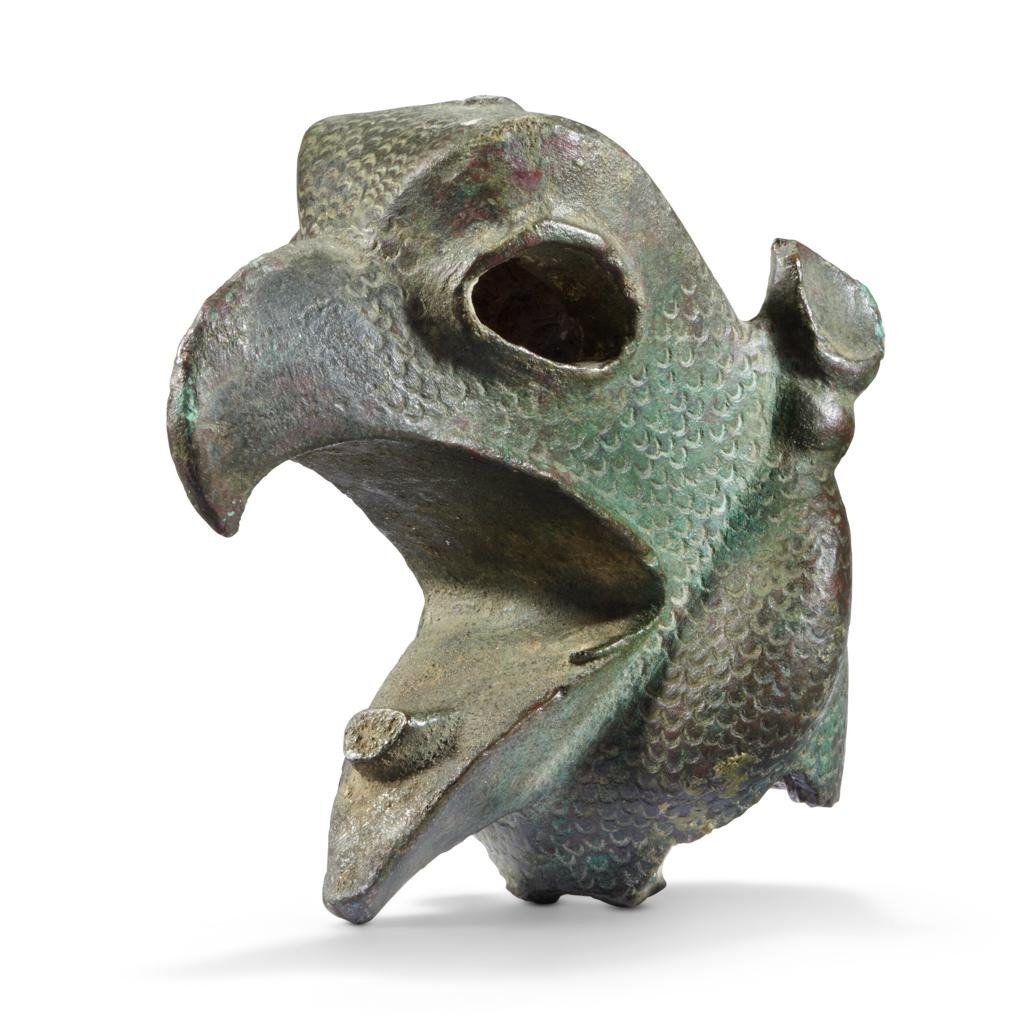
Griffins also appeared on decorative bronze vessels used in religious sanctuaries. A griffin-shaped attachment on an ancient cauldron was therefore not simply an illustration of a mythical animal; it was part of a broader visual culture in which objects, ritual settings, and powerful imagery interacted.
CANELLOPOULOS MUSEUM
+1
In this context, griffin symbolism can suggest several related ideas:
- Power: a creature beyond the capabilities of ordinary animals.
- Guardianship: the defense of precious or sacred objects.
- Mystery: association with distant lands and extraordinary beings.
- Divine connection: placement in religious or mythological settings.
These interpretations should not be treated as a single official Greek doctrine. Different stories and objects served different purposes.
Griffin Symbolism in the Medieval Period
During the medieval period, griffins appeared in manuscripts, church sculpture, decorative metalwork, textiles, and heraldic imagery.
Their symbolism became particularly interesting because medieval audiences could interpret the same hybrid creature in contrasting ways. Some representations emphasized vigilance and courage, while others treated fantastic hybrids as warnings about danger, disorder, or spiritual deception.
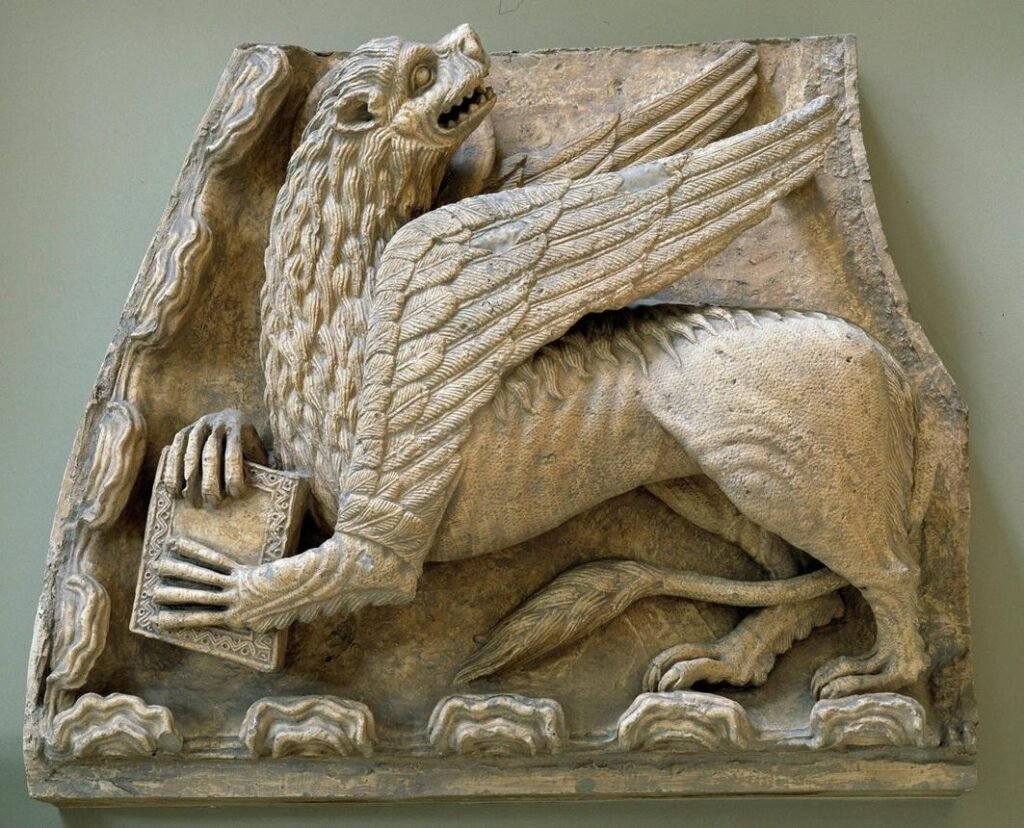
In some Christian artistic traditions, the griffin’s combination of an eagle and a lion was interpreted as an image of Christ’s dual nature, understood in Christian theology as both divine and human. Griffin sculptures could also serve as guardians in church architecture. The Cleveland Museum of Art documents this interpretation in its examples of twelfth-century guardian griffins.
Cleveland Museum of Art
+1
However, this was not the only medieval interpretation. The creature’s fierce appearance and hybrid form could also attract negative associations. A responsible account of medieval symbolism must acknowledge this variation rather than suggesting that every griffin in a church or manuscript carried the same meaning.
Griffins in Islamic Art and Cross-Cultural Exchange
Griffin imagery also appeared in artistic traditions outside medieval Christian Europe.
A notable example is the Pisa Griffin, a large bronze sculpture associated with the Islamic world and generally dated to the eleventh or twelfth century. It was later installed prominently in Pisa, Italy, where its meaning was reinterpreted over time. The sculpture’s history demonstrates how an artwork can move across geographic, religious, and cultural boundaries.
The Pisa Griffin
The presence of griffin imagery in Islamic-period art does not mean that all Muslim communities assigned the creature one shared religious meaning. Its significance depends on the object, its original setting, and its later use.
This example also illustrates a wider point about anthropology and visual culture: an image can be valued for its craftsmanship, prestige, decorative impact, or associations with authority even when its original context is no longer fully understood.
Griffin Symbolism Across Cultures and Traditions
The griffin’s meaning is best understood as a collection of historical interpretations rather than a universal symbolic code.
| Cultural or historical context | Common interpretation | Important qualification |
| Ancient Near East | Power and guardianship | Meanings varied among societies and objects |
| Ancient Greece | Mythical strength, treasure guardianship, divine associations | Literary stories and decorative objects had different functions |
| Medieval European heraldry | Courage, vigilance, authority, nobility | A specific emblem’s meaning depends on its owner and historical record |
| Medieval Christian art | In some contexts, a combination of divine and earthly qualities | Other traditions gave hybrids negative or ambiguous meanings |
| Islamic-period metalwork | Artistic prestige and sophisticated craftsmanship; possibly other contextual associations | The exact meaning must be established from the particular artifact |
| Modern fantasy | Loyalty, adventure, power, wisdom, and guardianship | Contemporary stories often invent their own symbolism |
| Modern branding and design | Strength, heritage, security, distinction | The message depends on design choices and audience expectations |
CANELLOPOULOS MUSEUM
+3
What Does a Griffin Symbolize in Different Belief Systems?
There is no single interpretation shared by every religion or culture.
In mythological storytelling, the griffin can protect valuable treasures or accompany powerful divine figures. In some Christian contexts, it has been used to express the relationship between earthly and divine qualities. In other historical contexts, hybrid creatures were treated with suspicion or associated with danger.
In modern spiritual reflection, a person might interpret the griffin as a symbol of courage, personal boundaries, balanced strength, or the connection between practical responsibilities and higher aspirations.
That last interpretation is a contemporary symbolic reading, not a claim about a universal ancient teaching. Distinguishing historical evidence from personal meaning helps prevent cultural traditions from being oversimplified.
The Psychological Meaning of Griffin Symbolism
From a psychological and visual-communication perspective, the griffin can be understood through the associations people bring to its component animals.
The lion’s form can suggest strength and confidence. The eagle’s features can suggest awareness, distance, and perspective. When these familiar images are combined, the resulting creature may appear unusually capable and commanding.
This is an interpretation of visual symbolism, not evidence that a griffin has a scientifically established psychological effect on every viewer.
Why Does the Griffin Feel Powerful?
Several visual characteristics contribute to its impact:
- Scale and posture: A large, upright griffin can communicate dominance and confidence.
- Talons and beak: These features suggest the ability to defend or confront threats.
- Wings: Wings can imply freedom, reach, elevation, or movement between worlds.
- Hybrid anatomy: Combining two powerful animals creates an image that exceeds the capabilities of either animal alone.
- Alert expression: Forward-facing attention can suggest vigilance and readiness.
These characteristics can influence interpretation in illustration, game design, advertising, and film. Their impact still depends on the viewer’s cultural knowledge and the surrounding visual context.
The Griffin as a Symbol of Inner Balance
The griffin can also represent the challenge of bringing different strengths together.
For example, a student may need both the eagle’s metaphorical perspective and the lion’s practical determination. A leader may need the confidence to make decisions and the awareness to understand their consequences.
The griffin offers a memorable metaphor for this relationship. It suggests that strength is not merely about having power; it is also about knowing how to use that power responsibly.
This interpretation can be useful in personal essays, educational discussions, character development, and reflective writing.
Griffin Symbolism in Spirituality and Religion
The spiritual meaning of the griffin depends heavily on its religious and historical context.
Christian Symbolism
Some medieval Christian interpretations associated the griffin’s two animal forms with Christ’s divine and human natures. In this reading, the eagle-like form could represent the heavenly or divine dimension, while the lion-like body could express earthly embodiment and kingship. Certain griffin sculptures also functioned as guardians around church entrances and other architectural features.
Cleveland Museum of Art
+1
Other medieval interpretations were less favorable. The griffin could appear among fantastic creatures associated with danger or moral uncertainty. Its hybrid body did not automatically make it sacred.
A careful interpretation therefore considers the surrounding artwork, accompanying symbols, location, date, and the beliefs of the community that produced it.
Does the Griffin Have a Spiritual Meaning Today?
Today, people may use griffin symbolism to reflect on protection, courage, resilience, wisdom, or a desire to combine practical life with spiritual growth.
Some people may regard a griffin image as personally meaningful when it appears in artwork, dreams, stories, or jewelry. Such interpretations belong to personal belief and cultural symbolism; they are not proof of supernatural communication or a guaranteed prediction of future events.
The most useful approach is to consider what the symbol means to the individual while remaining clear about the difference between personal interpretation and established historical evidence.
Griffin Symbolism in Dreams
Dream symbolism is not universal, and there is no scientifically established dictionary that can determine what every mythical creature means in a dream.
A person who dreams of a griffin might associate it with protection, courage, ambition, or the need to confront a challenge. Someone else might connect the same image with fear, authority, or an unfamiliar situation.
Rather than assuming that the dream predicts something, it can be more useful to ask:
- What emotions did the griffin evoke?
- Was it protecting something, observing from a distance, or simply present?
- Does the image connect with a current challenge or personal interest?
- What do lions, eagles, and mythical creatures mean to the dreamer?
These questions encourage thoughtful reflection without presenting an unsupported interpretation as fact.
Griffin Symbolism in Art, Architecture, and Iconography
The griffin has endured partly because it is visually adaptable. Artists can make it appear protective, threatening, regal, sacred, or fantastical by changing its posture, proportions, materials, and surroundings.
Griffin Symbolism in Sculpture and Architecture
Griffins have appeared in architectural decoration, carved stone figures, metalwork, and ornamental objects. Their combination of wings and powerful limbs makes them suitable for positions where artists want to suggest strength and vigilance.

9
A historical example is the pair of guardian griffins from northern Italy, dated approximately 1150–1175, now held by the Cleveland Museum of Art. Their placement and form illustrate how griffins could function as guardians within medieval architectural design.
Cleveland Museum of Art
+1
In architecture, griffins may communicate:
- Guardianship: They visually mark entrances and important boundaries.
- Prestige: Their elaborate forms create a sense of importance.
- Continuity: Traditional motifs connect a building with an older artistic heritage.
- Symbolic authority: Their commanding appearance can reinforce the significance of an institution.
A modern architect might use a griffin motif on a university gate or historic building to evoke heritage and vigilance. However, the meaning should be interpreted alongside the building’s actual history.
Griffin Symbolism in Painting and Decorative Arts
In painting, embroidery, jewelry, ceramics, and metalwork, griffins can be decorative motifs as well as meaningful symbols.
An embroidered griffin may communicate elegance and prestige, while a sculpted griffin with extended wings might emphasize protection or supernatural power. A small griffin on a ring may have a different purpose from a monumental sculpture on a building.
The distinction between artistic function and symbolic meaning is important. An object can be aesthetically impressive without carrying a single clearly documented message.
Griffin Symbolism and Semiotics
Semiotics is the study of signs and how they produce meaning. The griffin provides an excellent example because its symbolism depends on recognizable visual elements.
Its eagle-like head acts as a visual reference to a bird of prey. Its lion-like body recalls the imagery of a powerful land animal. The combination creates a new sign that can communicate more than either component alone.
Three elements help explain this process:
- The signifier: The visible image of the griffin.
- The signified: The ideas associated with it, such as power or protection.
- The context: The cultural setting that influences how viewers interpret the image.
A griffin carved on a medieval church may be interpreted differently from one displayed on a modern esports team logo. The creature remains recognizable, but the surrounding context changes its meaning.
Griffin Symbolism in Literature, Mythology, and Storytelling
The griffin is a versatile literary symbol because it can function as a guardian, companion, challenge, or emblem of authority.
The Griffin as a Guardian of Treasure
In ancient Greek traditions, griffins were associated with the guarding of gold in distant lands. These stories linked the creature with valuable possessions, extraordinary places, and the dangers involved in seeking wealth.
Encyclopedia.com
+1
In storytelling, a guardian griffin creates an immediate narrative question: what is worth protecting, and why?
The treasure may be literal gold, but a modern writer can also use it as a metaphor for knowledge, family heritage, a sacred object, or a community’s future.
The griffin then becomes more than an obstacle. It represents the principle that valuable things may require responsibility, courage, or wisdom to approach.
The Griffin as a Loyal Companion
In contemporary fantasy, griffins frequently appear as intelligent creatures capable of forming bonds with human characters. Their strength makes them suitable companions for explorers, guardians, or heroes.
A writer might use the griffin to symbolize trust built through shared challenges. Its ability to fly could represent freedom and discovery, while its protective instincts could represent loyalty.
These are modern storytelling possibilities rather than meanings that every ancient tradition assigned to the creature.
The Griffin as a Test of Character
A griffin guarding a passage can also represent a test of judgment.
A reckless character might attempt to overpower it, while a thoughtful character might seek to understand its purpose. This contrast allows the creature to represent the difference between brute force and responsible courage.
For example, a fantasy story could feature a griffin protecting a library containing dangerous knowledge. The hero’s challenge would not simply be to defeat the guardian but to demonstrate that the knowledge would be used wisely.
In this story, the griffin symbolizes both protection and the responsibility that accompanies access to power.
Griffin Symbolism in Modern Media and Popular Culture
Griffins continue to appear in fantasy novels, films, animation, video games, tabletop role-playing games, and digital illustration.
Their popularity is partly explained by their instantly recognizable design. A lion’s body communicates physical power, while the eagle’s head and wings suggest flight, awareness, and exceptional abilities.
Modern creators can adapt these features to suit different narratives.
| Modern use | Possible symbolic meaning | Example |
| Fantasy novels | Guardianship, loyalty, wisdom | A griffin protects an ancient library |
| Video games | Strength, mobility, exploration | A player rides a griffin across a fantasy world |
| Animated films | Friendship and courage | A griffin helps a character overcome a challenge |
| Sports branding | Competitive spirit and vigilance | A griffin appears on a team crest |
| Digital illustration | Mystery and fantasy | A griffin forms the centerpiece of a fantasy landscape |
| Educational storytelling | Balance and responsibility | A griffin represents combining knowledge with action |
These are illustrative applications, not claims that every work uses the griffin in exactly the same way.
Why Does the Griffin Work So Well in Fantasy?
The griffin occupies a useful middle ground between familiar and extraordinary. Viewers recognize its component animals, yet its combined form creates something that could not exist in the natural world.
This makes it useful for communicating exceptional ability without requiring lengthy explanations.
Its wings can support aerial movement in a game. Its claws can make it appear formidable. Its watchful face can suggest intelligence. A designer can emphasize any of these qualities depending on the character’s role.
Griffin Symbolism in Branding and Graphic Design
The griffin can serve as a distinctive visual identity for organizations seeking to communicate strength, confidence, heritage, or protection.
Because it combines features associated with two powerful animals, it can communicate several brand attributes in a single emblem. Yet the success of a griffin logo depends on execution, audience expectations, and the organization’s actual identity.
What Types of Brands Could Use a Griffin?
Potential applications include:
- Educational institutions seeking to express ambition and academic tradition.
- Sports teams wanting an emblem associated with determination and competitive strength.
- Fantasy publishers and game studios creating mythological identities.
- Museums or historical organizations highlighting mythology and artistic heritage.
- Fictional kingdoms, guilds, and organizations in creative projects.
These are design possibilities rather than recommendations for any specific organization.
How Color Changes Griffin Symbolism
Color can alter the emotional tone of the same creature. Its interpretation also depends on cultural conventions, contrast, surrounding imagery, and the medium in which it appears.
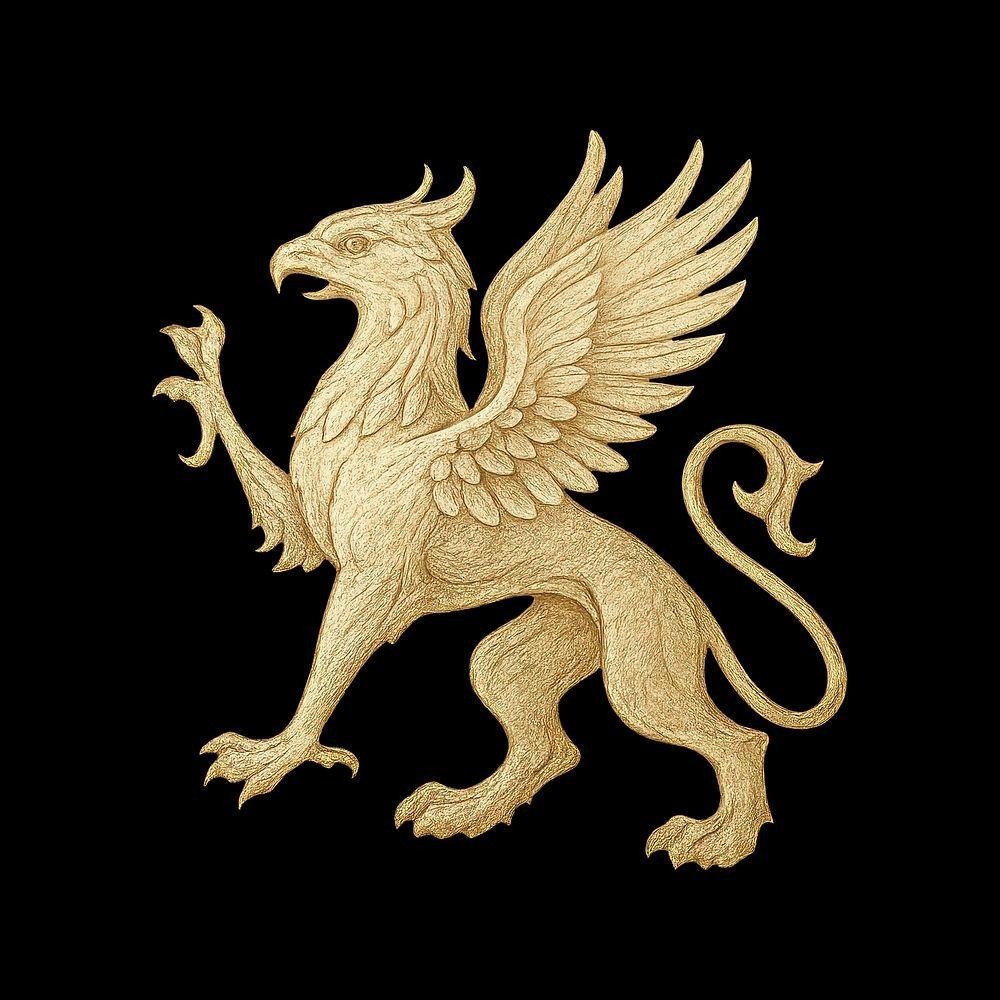
Gold griffin — prestige and achievement
Gold can suggest value, excellence, success, or ceremonial importance. It works well when a design needs to emphasize distinction and heritage.

Silver or white griffin — clarity and dignity
Pale metallic tones can produce a refined, formal appearance. The meaning depends on the design and its cultural context.
Red griffin — energy and courage
Red often attracts attention and may communicate intensity, action, or boldness. It can also create an aggressive impression if combined with sharp shapes and threatening poses.
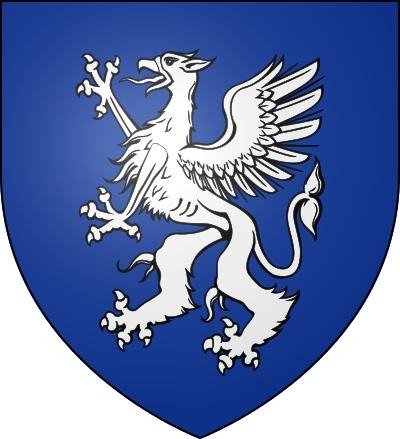
Blue griffin — confidence and stability
Blue is commonly used in institutional design to communicate reliability and professionalism. A blue griffin can therefore feel more composed than one rendered in vivid red.
These color meanings are common design associations, not universal rules. Color interpretation can vary significantly across cultures.
Expert Tip: Design a Griffin Logo That Communicates Clearly
Start by deciding which quality matters most: protection, courage, heritage, or innovation. Then select a pose, silhouette, and color palette that reinforces that message.
A griffin with folded wings and a balanced stance may feel dignified, while a griffin with spread wings and raised talons may appear more aggressive. Simplifying the silhouette can improve readability at small sizes, especially for app icons, social media profile images, and embroidered logos.
For a historically inspired design, research the specific heraldic or artistic tradition you intend to reference rather than presenting a modern invention as an authentic historical emblem.
Did You Know? Five Interesting Facts About Griffin Symbolism
- The griffin combines two powerful animals. Its traditional form joins the lion’s body with the head and wings of an eagle.
-
The image is older than its familiar medieval uses. Griffin-like motifs circulated in ancient Near Eastern and eastern Mediterranean art before becoming prominent in Greek artistic traditions.
CANELLOPOULOS MUSEUM
+1 -
Griffins appeared on ancient bronze vessels. Some griffin-shaped attachments decorated cauldrons used as offerings in Greek sanctuaries.
CANELLOPOULOS MUSEUM
+1 -
Their meanings were not always positive. Medieval interpretations could portray griffins as vigilant guardians or as threatening hybrid creatures.
Digital Collection
+1 -
An artwork’s meaning can change over time. The Pisa Griffin’s later history illustrates how the identity and interpretation of an object can shift as it moves between cultural settings.
The Pisa Griffin
Common Mistakes When Interpreting Griffin Symbolism
Understanding the griffin requires more than memorizing a list of meanings. Several common errors can lead to misleading interpretations.
Mistake 1: Assuming Every Griffin Means Protection
Protection is a recurring association, but it is not the only one. A griffin may represent authority, danger, prestige, supernatural power, or a combination of these ideas.
Better approach: Examine the creature’s posture, location, accompanying imagery, and historical context.
Mistake 2: Treating Modern Spiritual Interpretations as Ancient Facts
A contemporary writer might describe the griffin as a symbol of personal transformation or spiritual balance. Such interpretations can be meaningful, but they should not automatically be attributed to ancient cultures.
Better approach: Label modern interpretations clearly and distinguish them from documented historical beliefs.
Mistake 3: Assuming All Cultures Interpreted Griffins Identically
Symbols travel across borders, and their meanings change. A griffin in a Greek sanctuary, a medieval European manuscript, and an Islamic-period bronze sculpture does not necessarily communicate the same message.
Better approach: Consider the object’s date, origin, original use, and historical documentation.
Mistake 4: Confusing Mythology With Zoology
The griffin is a legendary creature, not an established animal species. Ancient stories about its habitat or behavior belong to mythology and historical belief, not modern zoological evidence.
Better approach: Discuss the griffin as a cultural and artistic figure unless the topic specifically concerns the history of mythical-animal beliefs.
Myth vs. Fact: Understanding the Griffin
| Claim | More accurate explanation |
| The griffin is a real animal. | It is a mythical hybrid creature. |
| Every griffin symbolizes good fortune. | Its meaning varies by culture, period, and context. |
| Griffin symbolism is exclusively European. | Griffin-like imagery has a much broader history, including ancient Near Eastern and Mediterranean traditions. |
| Griffins always represent Christian spirituality. | Some Christian interpretations used the griffin positively, while other interpretations differed. |
| Seeing a griffin guarantees protection. | Protection is a symbolic association, not a demonstrated supernatural effect. |
| Every griffin logo has ancient historical roots. | Many modern designs adapt the creature creatively without direct historical continuity. |
Practical Applications: How to Use Griffin Symbolism Thoughtfully
Griffin symbolism can be useful wherever visual stories communicate values, identity, or character.
In Education
Teachers can use the griffin to explore mythology, cultural exchange, hybrid creatures, and the relationship between art and belief. Students can compare how a single motif changes across historical periods.
A useful classroom exercise is to compare a Greek griffin-shaped vessel attachment with a medieval guardian sculpture. Students can identify shared visual features and consider how their settings may have influenced their meanings.
In Writing and Storytelling
Writers can use the griffin as a guardian, a loyal companion, a test of courage, or an emblem of a powerful institution.
Before using the creature, decide what it protects and why. This gives the symbol a meaningful role in the plot instead of making it decorative background.
In Personal Reflection
The griffin can serve as a metaphor for combining complementary strengths. Its lion-like qualities can suggest action and confidence, while its eagle-like qualities can suggest awareness and perspective.
A useful reflection question is: How can I combine courage with good judgment when facing a difficult decision?
This is a personal-development application, not a universal spiritual prescription.
In Branding and Visual Communication
A griffin can help communicate strength, vigilance, or heritage when those values fit the identity of an organization.
Designers should consider audience familiarity, cultural context, visual simplicity, and the risk of appearing overly aggressive. They should also ensure that historical claims about the emblem are supported by evidence.
In Cultural and Historical Research
The griffin offers a case study in iconography, anthropology, and cultural transmission. Researchers can trace how a visual motif moved across regions, how its physical features changed, and how communities assigned different meanings to it.
This approach is more informative than treating symbolism as a fixed dictionary in which every image has only one definition.
Frequently Asked Questions About Griffin Symbolism
1. What does a griffin symbolize spiritually?
A griffin can be interpreted spiritually as a symbol of protection, courage, wisdom, and the relationship between earthly responsibilities and higher aspirations. Some medieval Christian interpretations associated its eagle and lion features with Christ’s divine and human natures. Spiritual meanings vary, however, and there is no single interpretation shared by every belief system.
2. Is a griffin a symbol of protection?
Yes, protection is one of the griffin’s most recognizable symbolic associations. Griffin figures have appeared as guardians in mythology, decorative art, and medieval architecture. Their powerful appearance makes them suitable symbols of vigilance and defense, although the meaning of an individual image depends on its historical and cultural setting.
3. What do the lion and eagle represent in griffin symbolism?
The lion commonly evokes strength, courage, and earthly authority, while the eagle can suggest vision, vigilance, and elevation. Together, these animals create a hybrid symbol that may express combined strength, awareness, and power. These are broad symbolic associations rather than meanings that remain identical across every culture.
4. What does a griffin symbolize in dreams?
There is no scientifically established universal meaning for dreaming about a griffin. Depending on a person’s experiences, the creature might suggest protection, courage, ambition, authority, or uncertainty. Reflecting on the dream’s emotions and personal associations is more appropriate than treating it as a guaranteed prediction or supernatural message.
5. What does a griffin symbolize in heraldry?
In heraldry, the griffin is commonly associated with courage, vigilance, strength, and nobility. It can appear on coats of arms and institutional emblems. However, the precise meaning of a particular heraldic griffin depends on its documented history, the person or organization that adopted it, and the design in which it appears.
6. Why is the griffin important in mythology and modern fantasy?
The griffin combines recognizable animal features into a creature that appears exceptionally powerful and capable. In mythology, it can guard treasure or appear in stories involving divine figures. In modern fantasy, it can function as a guardian, companion, mount, or test of character. Its adaptability makes it useful for expressing courage, loyalty, mystery, and authority.
Key Insights: What Griffin Symbolism Teaches Us
Griffin symbolism demonstrates how a mythical creature can communicate complex ideas through a recognizable visual form. Its traditional combination of lion and eagle features provides a foundation for associations with strength, vigilance, protection, courage, and authority.
Its historical journey also reveals why context matters. Griffin-like creatures appeared in ancient Near Eastern and Mediterranean art, became prominent in Greek mythology and decorative traditions, and later took on varied meanings in medieval European art and other cultural settings. Modern storytelling and design continue to reinterpret the creature.
The most important lesson is that symbols do not exist independently of the people who use them. Their meanings emerge through history, belief, artistic choices, and cultural experience.
Understanding griffin symbolism therefore helps readers interpret mythology, architecture, heraldry, literature, branding, and visual communication more thoughtfully. It also encourages a balanced approach: appreciate the symbol’s imaginative power while distinguishing documented history from modern interpretation and personal belief.

