Pig symbolism is more complex than many people realize. Across history, the pig has represented prosperity, abundance, fertility, intelligence, indulgence, stubbornness, and, in some religious traditions, impurity. These contrasting meanings reveal how people use animals to express their beliefs, values, fears, and hopes. Understanding pig symbolism offers a fascinating way to explore cultural identity, mythology, spirituality, psychology, literature, and everyday communication.
Few animals demonstrate the influence of cultural context as clearly as the pig. In some societies, pigs are associated with wealth, hospitality, celebration, and good fortune. In others, they carry religious restrictions or negative associations with greed and excessive consumption. Neither interpretation tells the whole story: a symbol’s meaning depends on the historical setting, the community interpreting it, and the way the animal appears in a particular narrative or image.
Today, pigs continue to appear in children’s stories, popular culture, advertising, folklore, religious discussions, and visual design. Whether a pig represents financial success, an untidy environment, a clever survivor, or an innocent character, its symbolic meaning depends on context rather than appearance alone.
What Does Pig Symbolism Mean?
Pig symbolism refers to the meanings and associations people attach to pigs in cultural traditions, religion, mythology, psychology, art, and storytelling. Pigs can symbolize abundance, fertility, prosperity, intelligence, and good fortune, while other interpretations connect them with greed, gluttony, impurity, or excess. Their meaning varies significantly across cultures, belief systems, historical periods, and individual experiences.
At its heart, pig symbolism illustrates an important principle of cultural interpretation: the same animal can communicate very different ideas depending on where and how it appears.
1. The Core Symbolic Meanings of Pigs
Pig symbolism can be understood through several interconnected themes. Some arise from the animal’s practical role in agriculture and community life, while others develop through religious teachings, folklore, language, and artistic imagination.
Prosperity and abundance
One of the most positive interpretations of pig symbolism is material abundance. Historically, livestock represented stored wealth: an animal could provide food, reproduce, and be exchanged for goods or social obligations. In communities where pigs were valuable livestock, owning them could demonstrate a household’s resources and ability to support others.
This association helps explain why pigs can symbolize prosperity, good fortune, and economic security.
The meaning is particularly clear in parts of Melanesia, including the highlands of Papua New Guinea, where pigs have played important roles in ceremonial exchanges, marriage arrangements, conflict resolution, and community celebrations. Anthropological research describes pigs not simply as livestock but as participants in relationships through which wealth, obligations, and status are expressed.
Wiley Online Library
+1
Example: A pig-shaped savings bank turns the animal into a visual metaphor for accumulating money. Its symbolism works because viewers connect the pig with stored resources and future financial security.
Fertility and new beginnings
Pigs can also symbolize fertility, reproduction, and the continuation of family or community life. Their capacity to reproduce made them meaningful within agricultural societies concerned with food supplies, household stability, and the future of livestock herds.
In some cultural traditions, these practical associations developed into ritual meanings involving fertility, prosperity, and renewal. Research on pre-contact Society Island communities in Polynesia, for example, documents pigs in fertility-related rituals and other important ceremonial practices.
Wiley Online Library
However, fertility is not a universal meaning of the pig. It is best understood as a context-specific association rather than an inherent spiritual property of the animal.
Intelligence and adaptability
Pigs are often associated with resourcefulness because they can learn, explore their surroundings, and adapt their behavior to different environments.
These characteristics make pigs useful characters in stories about problem-solving and survival. A fictional pig might escape danger through clever thinking rather than physical strength, encouraging audiences to value intelligence over appearances.
In this context, pig symbolism communicates a simple lesson: an underestimated character may possess abilities that others fail to recognize.
Greed and excessive consumption
In some literary and everyday contexts, pigs symbolize greed, gluttony, or selfishness. These associations are reinforced by expressions that compare people to pigs when criticizing their eating habits, behavior, or disregard for others.
Such meanings are cultural judgments, not scientific descriptions of pigs. The animal itself does not embody a human moral failing. Rather, people use familiar ideas about eating, appetite, and livestock to create a metaphor for excess.
Impurity and disorder
Another familiar association connects pigs with dirt, mess, or impurity. This interpretation reflects a mixture of practical observation, cultural attitudes, religious classifications, and language.
The important distinction is between an animal’s actual behavior and the symbolic meaning people assign to it. Pigs may wallow in mud, which can help them regulate body temperature, but describing someone as a “pig” to suggest poor hygiene is a human convention, not an objective moral truth.
Community, generosity, and social bonds
Pigs can symbolize generosity and social responsibility when they are exchanged or shared during major communal events.
In some Pacific societies, pigs have historically been presented at feasts, used in ceremonial exchanges, or given to acknowledge obligations between families and leaders. Their significance comes not only from their economic value but also from the relationships created through giving and receiving.
Wiley Online Library
+1
This provides an important alternative to interpretations centered on greed: a pig may symbolize wealth accumulated for oneself, or resources shared to strengthen a community.
2. Historical Origins and Evolution of Pig Symbolism
Pig symbolism developed alongside the changing relationship between humans and pigs. As people domesticated and raised pigs, the animals became part of food production, household economies, ceremonial life, and cultural storytelling.
Early agricultural societies
In farming communities, livestock had practical and symbolic importance. Animals could represent food security, productive land, household prosperity, and the ability to survive difficult seasons.
Pigs were especially meaningful in settings where people could raise them using locally available resources. Their reproductive capacity and usefulness as livestock made them tangible signs of economic potential.
Over time, these practical associations could extend into social status, family prosperity, and ritual importance. An animal that contributed directly to a household’s livelihood could become a symbol of the household’s standing in the wider community.
It is important not to assume that every ancient society interpreted pigs in the same way. Archaeological remains can show that pigs were present, consumed, traded, or used in particular settings, but they do not automatically reveal the complete symbolic beliefs of the people who kept them.
Pigs in ancient Mediterranean and European traditions
Across parts of the ancient Mediterranean and Europe, pigs and wild boars appeared in food systems, myths, hunting traditions, and artistic representations. Their meanings varied according to the species, narrative, and cultural setting.
The wild boar, in particular, could represent formidable natural power because of its strength, tusks, and reputation as a challenging animal to hunt. In stories about hunters and heroes, the boar could function as a test of courage or a representation of untamed nature.
Domestic pigs carried different associations, including food, household resources, and, in later literary traditions, comic or negative depictions of human behavior.
The distinction between a domestic pig and a wild boar matters. Although related, they do not necessarily carry the same cultural meaning. A wild boar in a heroic narrative may symbolize danger or courage, while a pig in a household scene may suggest nourishment or abundance.
Medieval and early modern symbolism
During the medieval and early modern periods in Europe, pigs appeared in religious imagery, folk traditions, everyday speech, and moral storytelling. Their familiarity made them convenient symbols for communicating ideas about appetite, behavior, and social order.
Artists and storytellers could use the animal to criticize excessive eating or human foolishness. At the same time, pigs remained economically important livestock, meaning their everyday practical value did not disappear simply because negative metaphors developed around them.
This coexistence of practical usefulness and moral criticism illustrates a recurring feature of animal symbolism: a culture can depend on an animal while using its image to express disapproval of certain human behaviors.
Modern interpretations
Today, pig symbolism appears in advertising, cartoons, savings products, children’s books, memes, and discussions of cultural identity.
A piggy bank may suggest saving and financial responsibility. A cartoon pig might represent humor, courage, friendship, or innocence. A pig used as an insult may suggest greed or untidiness.
The surrounding message determines which association becomes dominant.
3. Pig Symbolism Across Different Cultures
Pig symbolism is not universal. The same animal can represent wealth in one setting and religiously restricted food in another. Understanding these differences requires attention to local history, social practices, and belief systems.
| Cultural context | Common symbolic associations | Important qualification |
| China and East Asian zodiac traditions | Zodiac identity, prosperity, good fortune, and abundance in some interpretations | Zodiac meanings vary by tradition and individual interpretation. |
| Papua New Guinea and parts of Melanesia | Wealth, exchange, prestige, marriage obligations, and community relationships | Practices differ between communities and historical periods. |
| Polynesian societies | Ceremonial importance, elite status, feasting, and, in some traditions, fertility rituals | The role of pigs varies across islands and communities. |
| Jewish religious tradition | Dietary restriction and distinctions between permitted and prohibited animals | This is a religious classification, not a universal judgment about the animal. |
| Islamic tradition | A prohibited food and a reminder of religious dietary boundaries | Interpretations should be discussed respectfully within the context of Islamic teaching. |
| European folklore and literature | Abundance, appetite, foolishness, greed, or untidiness | The intended meaning depends on the particular story or expression. |
Pig symbolism in Chinese culture
The pig is one of the twelve animals in the traditional Chinese zodiac. Within this system, the pig is associated with a recurring year in the twelve-year cycle. Zodiac traditions connect each animal with personality characteristics and symbolic interpretations, although these associations are cultural beliefs rather than scientifically established personality predictions.
The Metropolitan Museum of Art
In popular interpretations, the pig may represent abundance, comfort, generosity, or good fortune. Its association with material resources makes it a natural image for prosperity-related decorations and gifts.
However, Chinese symbolism is not a single fixed system. Interpretations can vary according to historical period, regional custom, the particular artwork, and the other symbols appearing alongside the pig.
Practical example: A decorative pig displayed during a celebration might be intended to communicate hopes for household prosperity. Its meaning comes from the cultural setting and the wishes attached to the object.
Pig symbolism in Melanesia
In some Melanesian communities, pigs have historically served as important forms of wealth and instruments of social exchange. They can be involved in ceremonies connected with marriage, mourning, compensation, community alliances, and the resolution of disputes.
Research published in American Ethnologist in 2024 describes how pig feasts in parts of New Guinea continue to intersect with social relationships, ceremonial life, and changing religious institutions.
Wiley Online Library
+1
This is a particularly valuable example because it demonstrates that wealth is not always understood as money or privately accumulated possessions. In some social settings, wealth becomes meaningful through the ability to give, distribute, and fulfill obligations.
A pig may therefore represent not only prosperity but also a person’s relationships and responsibilities.
Pig symbolism in Polynesian societies
Historical and archaeological research on the Society Islands documents pigs as valued food animals associated with elite feasts, ceremonial offerings, tribute, and social exchange. Some traditions also connected pigs with fertility rituals and religious cosmology.
Wiley Online Library
+1
These practices demonstrate that the pig’s symbolic importance could extend far beyond its nutritional value. The animal could express status, political authority, ritual obligations, and relationships between people and the sacred.
Nevertheless, Polynesia includes many distinct societies. Findings about the Society Islands should not automatically be applied to every Polynesian community.
Pig symbolism in European folklore
European folklore and literature frequently use pigs to explore the tension between appetite and self-control.
In a humorous tale, a pig may be a lovable, clever, or misunderstood character. In a moral fable, the same animal might represent foolishness or excessive desire. In a farm setting, it may simply symbolize practical work and household livelihood.
The strongest interpretation comes from the narrative itself. A pig should not automatically be interpreted as greedy merely because it appears in a European story.
4. Pig Symbolism in Religion and Spirituality
Religious interpretations of pigs are especially important because they demonstrate how the same animal can carry very different meanings depending on a faith’s teachings and practices.
Pig symbolism in Judaism
In Jewish religious tradition, pigs are classified as animals that are not permitted for consumption under the dietary laws described in the Torah. Leviticus 11:7–8 and Deuteronomy 14:8 identify the pig as prohibited for food.
The pig’s religious significance therefore relates to the observance of dietary commandments and the distinction between permitted and prohibited foods.
It is important to understand that this classification does not mean every Jewish person uses the pig as a general symbol of greed, evil, or moral corruption. Religious dietary law and broader cultural symbolism are different things.
Pig symbolism in Islam
In Islam, pork is prohibited for consumption. The prohibition appears in the Quran, including 2:173, 5:3, 6:145, and 16:115.
The pig’s place in Islamic discussions is therefore closely connected to halal dietary principles, religious obedience, and the distinction between permitted and prohibited food.
For Muslims, avoiding pork is a matter of religious practice rather than a symbolic personality judgment about people who eat it. Discussions of pig symbolism should preserve this distinction and avoid treating a religious dietary rule as evidence of hostility toward any group.
Pig symbolism in Christianity
Christian interpretations require historical and textual context. The Hebrew Bible includes dietary restrictions concerning pigs, while the New Testament contains passages that Christians have interpreted in relation to food, purity, and the inclusion of non-Jewish believers.
For example, Acts 10 describes Peter’s vision involving animals and the question of ritual purity. Christian traditions differ in how they explain the passage and its relationship to dietary rules.
Pigs also appear in the Gospel narratives. In Mark 5:1–20 and Luke 8:26–39, a herd of pigs features in the account of Jesus healing a man troubled by unclean spirits. In Matthew 7:6, pigs appear in a metaphor concerning the inappropriate offering of sacred things.
These passages serve different narrative purposes. They should not be combined into one universal Christian interpretation of the pig.
Pig symbolism in Hindu traditions
Hindu traditions are diverse, and interpretations of pigs differ across regions, communities, and religious contexts. It would be inaccurate to claim that Hinduism has one universal symbolic meaning for the pig.
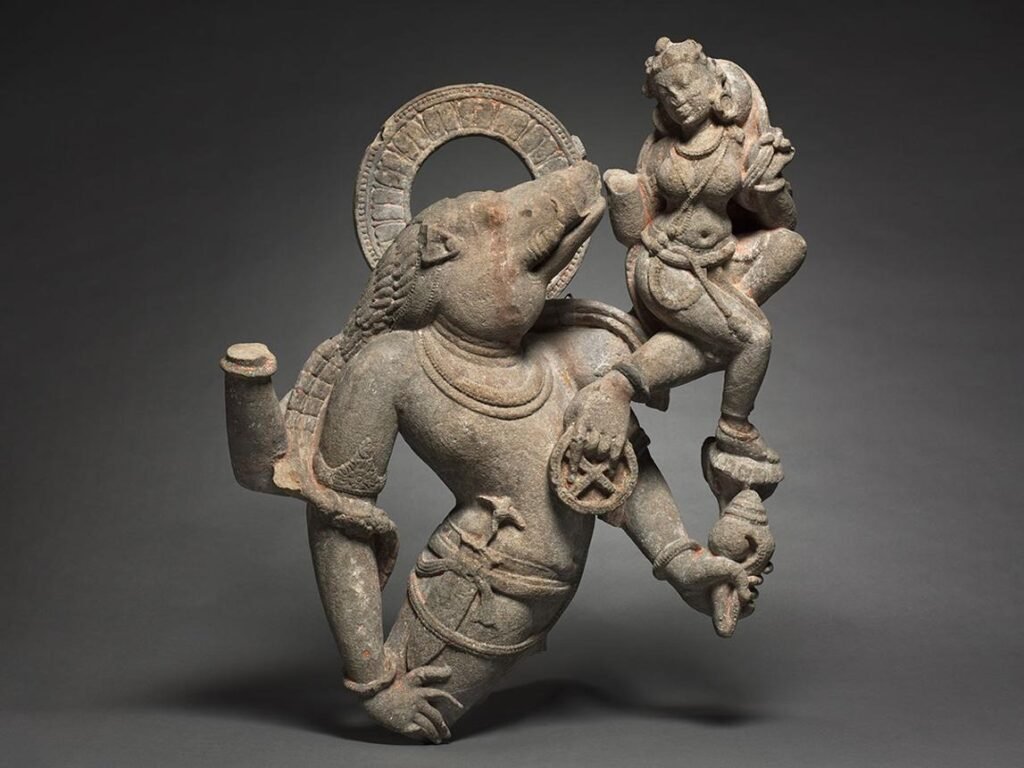
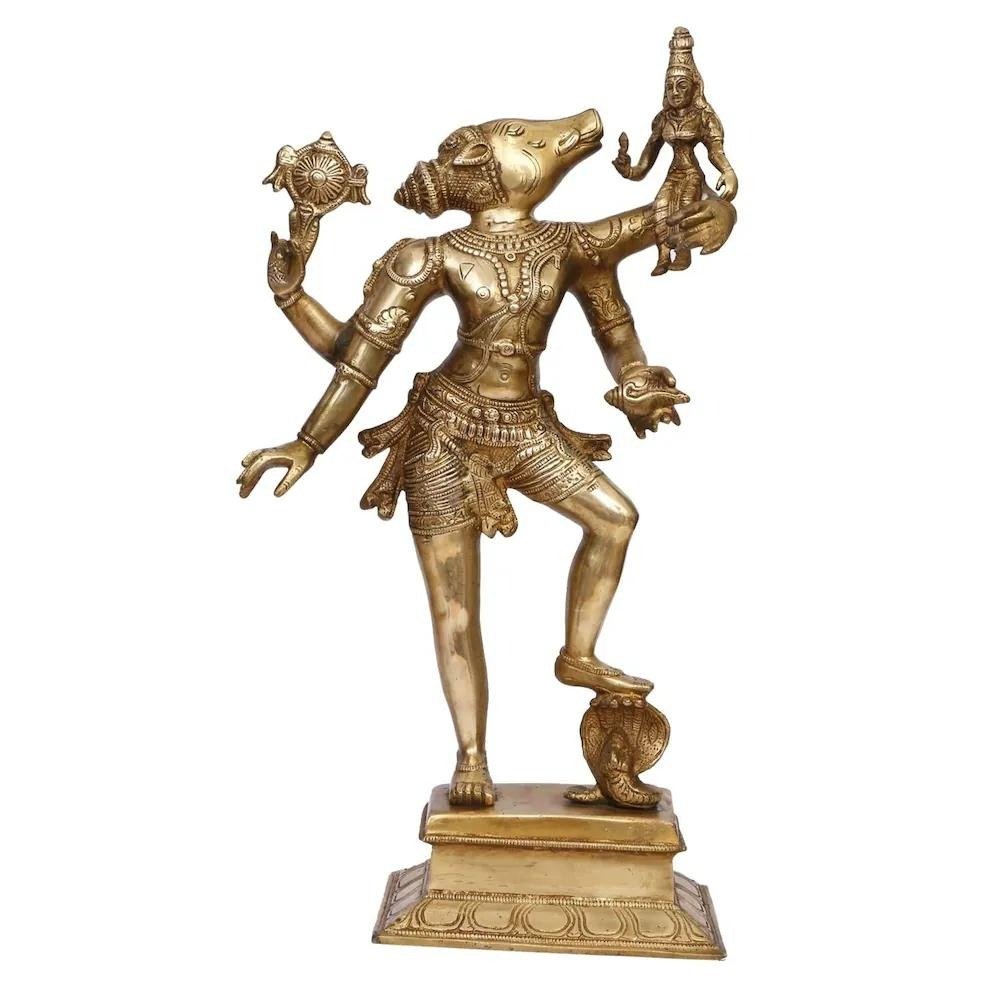
A particularly important distinction is between the domestic pig and Varaha, the boar incarnation of Vishnu in Hindu tradition. Varaha is associated with the restoration of the Earth and the defeat of a force that threatens cosmic order.

8
Varaha is a boar, not simply a domestic pig. His symbolism is rooted in a specific religious narrative involving divine power, protection, and the restoration of balance.
This example demonstrates why identifying the animal correctly matters. The symbolism of a sacred boar cannot automatically be transferred to every depiction of a domestic pig.
Can pigs be spiritual symbols?
Yes. Pigs can function as spiritual symbols when a religious or cultural tradition assigns them a particular meaning. Depending on the context, they may be connected with abundance, ritual exchange, fertility, divine narratives, dietary restrictions, or moral lessons.
However, there is no universally accepted spiritual meaning of the pig. Claims that seeing a pig always signals a blessing, warning, or supernatural message should be understood as personal or tradition-specific interpretations rather than established facts.
5. Psychological Meaning of Pig Symbolism
Pig symbolism can also be explored through psychology, especially the way familiar animals become metaphors for human behavior.
Psychological interpretation does not require assuming that pigs possess human moral qualities. Instead, it examines how people use an animal’s appearance, behavior, cultural reputation, and associations to communicate ideas.
Appetite and self-control
Because pigs are commonly associated with food and eating, they can become symbols of appetite or excess in stories and everyday language.
A writer may use a pig character to explore the difference between enjoying something and allowing a desire to dominate every decision. The character then becomes a storytelling device for examining self-control.
This is a symbolic interpretation, not a psychological diagnosis of anyone compared to a pig.
Resourcefulness and underestimated intelligence
Pigs can also represent practical intelligence. A story may portray a pig as a character who succeeds through observation, adaptability, and problem-solving.
Such portrayals challenge superficial judgments. Instead of relying on appearance or social status, audiences are encouraged to consider what a character actually does.
This interpretation can be particularly effective in children’s stories, where an underestimated character discovers a solution that stronger or more confident characters overlook.
Comfort, security, and abundance
A pig associated with a full pantry, a farm, or a prosperous household may evoke feelings of safety and material comfort.
The emotional response depends on the viewer’s experiences. Someone who associates pigs with a family farm may see them as familiar and reassuring, while another person may connect them with unpleasant conditions or negative stereotypes.
Psychology helps explain why symbols are not interpreted identically by everyone: personal associations interact with learned cultural meanings.
The shadow side of prosperity
A pig can also communicate the difference between having resources and using them wisely.
In a moral tale, an excessively greedy character may accumulate food or money without sharing it. The pig image reinforces the theme of abundance becoming destructive when it is disconnected from generosity or responsibility.
The deeper message is not that prosperity is inherently bad. It is that the same resources can support personal comfort and community well-being, or become symbols of excess when used without consideration for others.
6. Pig Symbolism in Dreams
Pig dreams are sometimes interpreted through traditional dream dictionaries, spiritual beliefs, or modern personal reflection. There is no reliable scientific basis for assigning one fixed meaning to every dream involving a pig.
A more balanced approach considers the dream’s setting, the dreamer’s emotions, personal experiences, and cultural background.
| Dream scenario | Possible symbolic interpretation | A useful question to consider |
| A healthy pig on a farm | Security, resources, or everyday responsibilities | What currently makes me feel secure? |
| A pig in a field | Growth, practical work, or a connection with nature | What am I developing or maintaining? |
| A playful pig | Humor, comfort, or a desire for greater ease | Where could I welcome more enjoyment? |
| A pig protecting its young | Care, responsibility, or family connections | Whom or what am I trying to protect? |
| A pig in a chaotic environment | Stress, disorder, or an unresolved concern | Is something in my life feeling difficult to manage? |
| A pig in a religious or ceremonial setting | Cultural identity, belief, or a question of values | What beliefs or traditions are relevant to me? |
These are possibilities for reflection, not predictions.
For example, a person who grew up on a farm may associate pigs with family memories and practical work. Someone else may remember a children’s story or a religious lesson. Those experiences can shape the emotional meaning of the same dream image.
Expert tip: Start with the emotion you experienced in the dream rather than immediately consulting a symbolic definition. A pig that makes you feel safe may mean something different to you from one that creates anxiety.
It is also important not to make major life decisions based solely on a dream interpretation.
7. Pig Symbolism in Mythology and Folklore
Mythology and folklore turn familiar animals into characters that communicate ideas about power, survival, transformation, and human responsibility.
The boar as a symbol of power
Wild boars appear in several mythological and heroic traditions. Their tusks, strength, and unpredictable behavior make them effective representations of dangerous natural power.
In European mythology, boars may appear as formidable opponents in hunting narratives or as creatures associated with bravery and the wilderness. The encounter between a hero and a boar can represent a test of courage or a confrontation with forces that are difficult to control.
In Hindu tradition, Varaha offers a different model: the divine boar represents protection and the restoration of cosmic order.
Although both examples involve boar imagery, their meanings differ according to the story. One may emphasize a dangerous challenge, while another emphasizes divine intervention.
Pigs as characters in folktales
Pigs often appear in folk narratives because audiences readily recognize them as familiar domestic animals.
They can represent:
- Practical intelligence and resourcefulness.
- The consequences of greed or carelessness.
- The value of cooperation.
- The contrast between appearance and ability.
- The importance of planning for the future.
In some stories, a pig character succeeds because it works carefully while others take shortcuts. In others, a pig becomes a humorous figure whose behavior exposes human foolishness.
The animal itself does not dictate the lesson. The plot, character development, and outcome determine the intended symbolism.
Pig symbolism in children’s stories
Children’s literature frequently uses pigs to make abstract ideas easier to understand.
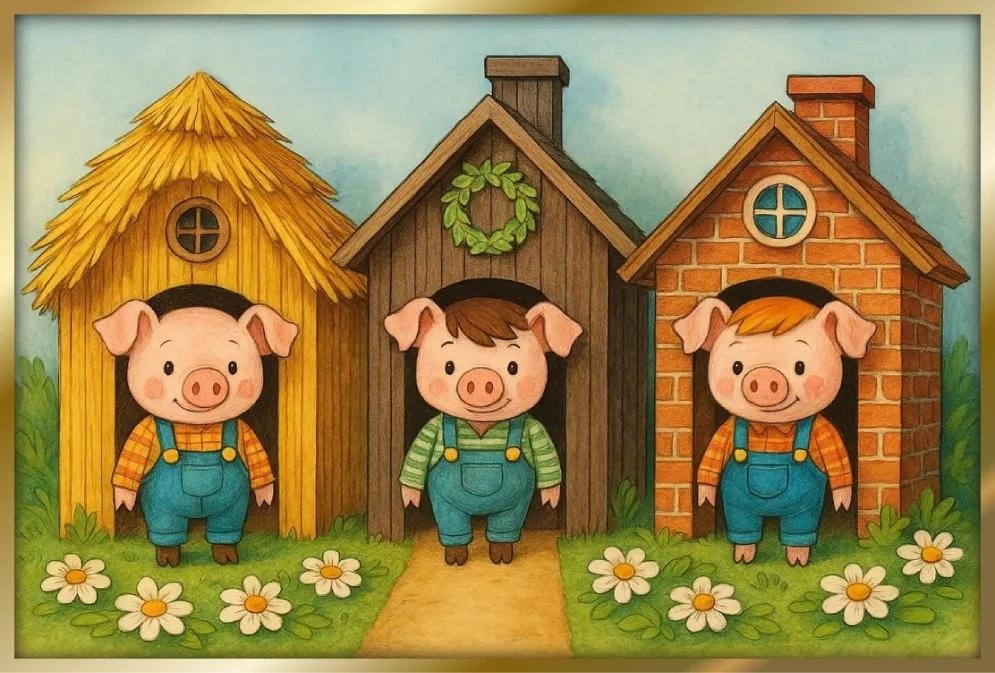
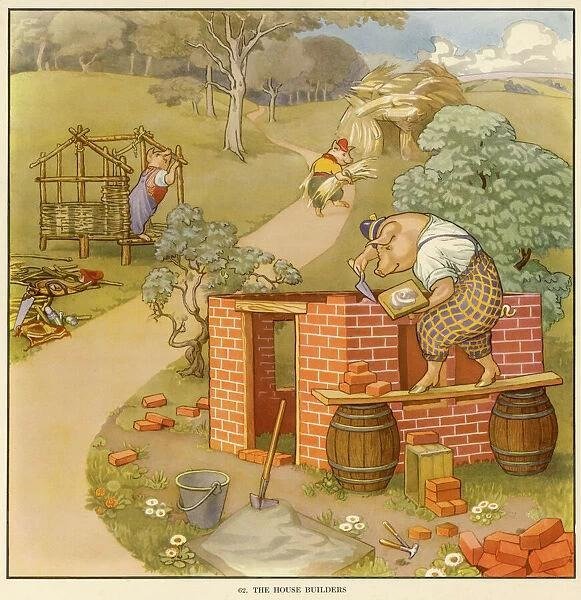
The Three Little Pigs, for example, presents three pigs who build homes using different materials and approaches. The contrast between their decisions helps communicate themes of preparation, effort, and the consequences of taking shortcuts.

9
The story’s symbolism is not simply about pigs. It uses animal characters to model human decision-making in a memorable form.
This makes pig characters useful educational tools. Teachers and parents can use them to discuss planning, persistence, cooperation, and problem-solving without requiring young readers to begin with abstract explanations.
8. Pig Symbolism in Art, Literature, and Popular Culture
Visual art and literature often rely on familiar animal associations to communicate meaning quickly. Pigs are particularly versatile because they can appear affectionate, comic, prosperous, threatening, or critical.
Pig imagery in visual art
Artists may use pig imagery to represent rural life, food production, wealth, humor, or social criticism.
A realistic painting of a pig in a farmyard might emphasize the relationship between people, animals, and the land. A stylized pig sculpture made from metal might suggest industrial production or consumer culture. A cartoon pig with exaggerated expressions may be designed primarily to communicate humor or friendliness.
In each case, the material, setting, pose, and surrounding imagery influence the meaning.
Pig symbolism in literature
Writers use pigs in both literal and metaphorical ways.
A pig in a farming novel might represent a family’s livelihood. In a fable, it might illustrate the consequences of selfishness. In a satirical work, a pig character could expose hypocrisy or the abuse of authority.
George Orwell’s Animal Farm is a particularly significant literary example. The novel uses farm animals as political allegories, and its pigs become central figures in a narrative about power, ideology, and the corruption of revolutionary ideals.
The pigs’ symbolic role develops through their actions and their relationships with the other animals. Their meaning is therefore political and narrative rather than a simple claim that all pigs represent greed.
Pig symbolism in film and animation
Animated pigs can communicate warmth, bravery, innocence, comedy, or intelligence. Their recognizable shapes also make them convenient characters for stories aimed at younger audiences.
A small pig who protects friends may symbolize courage despite limited physical size. A comic pig may represent the enjoyment of ordinary pleasures. A clever pig who solves a problem may challenge assumptions about intelligence.
Filmmakers also use contrast to create meaning. A friendly pig in a threatening environment may emphasize vulnerability, while a powerful wild boar in a dramatic landscape may create tension.
Pig imagery in memes and digital communication
In digital communication, pigs appear in emojis, stickers, reaction images, and humorous posts.
A pig emoji may convey affection for animals, food-related humor, celebration, or a reference to wealth and savings. In other situations, pig imagery may be used as an insult, making it important to consider the recipient and context.
The same image can therefore create very different reactions depending on the relationship between the people communicating and their shared cultural references.
9. Pig Symbolism in Branding, Advertising, and Design
Pig imagery has practical value in branding because it combines a distinctive visual shape with a wide range of cultural associations.
Why businesses use pig imagery
A pig can communicate different brand messages depending on its design and industry.

Finance and saving
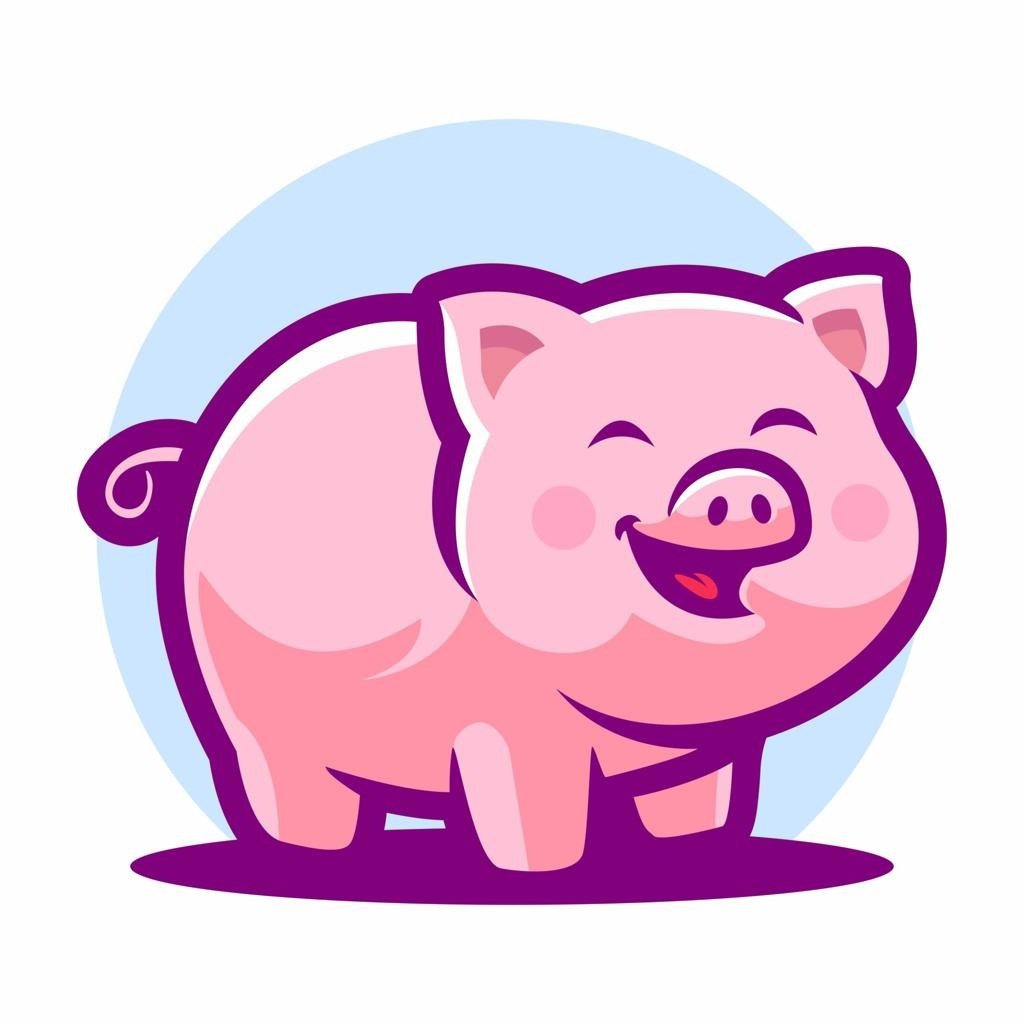
Piggy banks connect pig imagery with saving money, accumulating resources, and building financial habits. This is one of the clearest examples of symbolism influencing consumer recognition.
Children’s products and education
A friendly pig character can appear approachable and memorable. Rounded shapes and expressive features often help communicate playfulness and warmth.
Agriculture and food-related branding
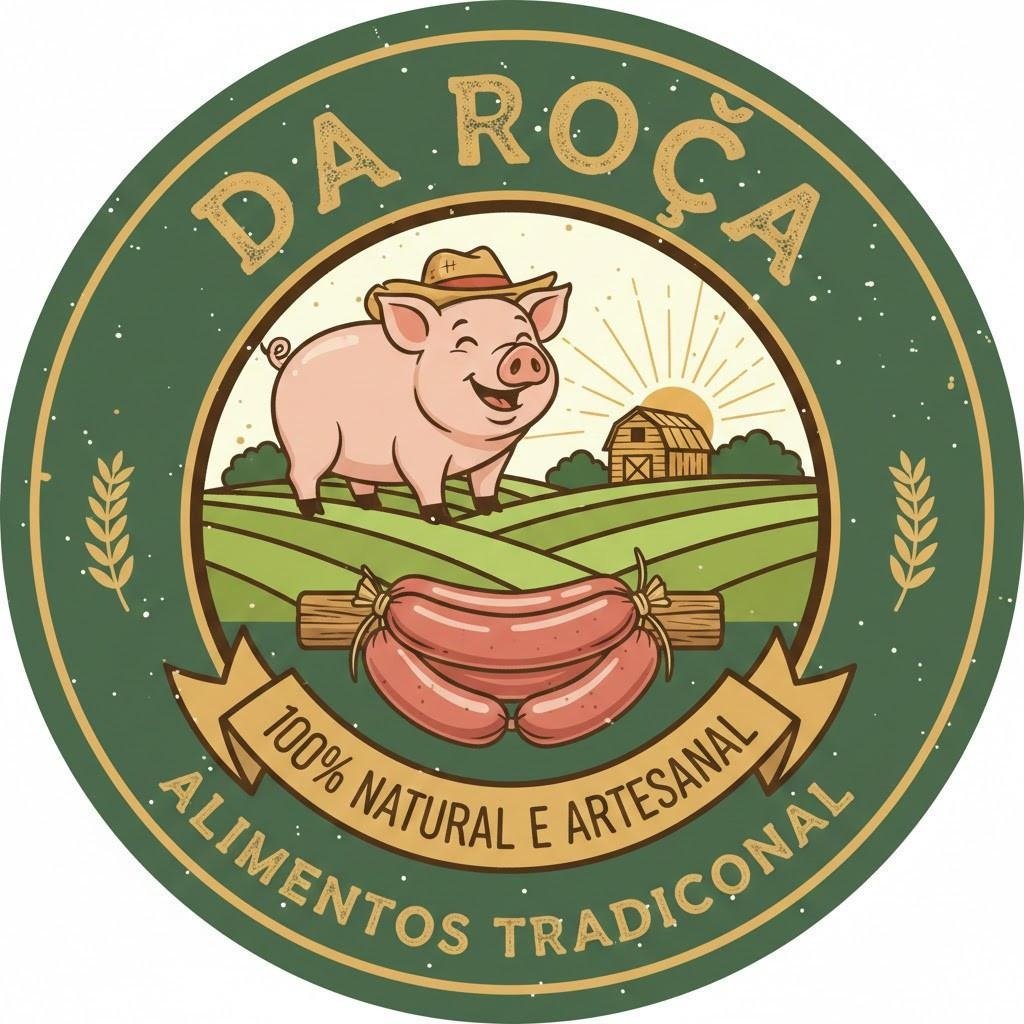
Pig illustrations can communicate farming, animal husbandry, or a product’s connection with livestock. Designers should consider dietary practices and the intended audience before using the imagery.

Strength and heritage
A wild boar emblem can suggest resilience, determination, and formidable power. This interpretation differs from the softer, more playful associations of a rounded cartoon pig.
Color psychology and pig imagery
The colors used in pig illustrations influence how audiences perceive them, although color associations are not universal.
| Color treatment | Possible impression | Suitable design context |
| Pink | Friendly, playful, familiar | Children’s illustrations and lighthearted mascots |
| Brown | Earthy, rustic, natural | Farm-related designs and rural storytelling |
| Gold | Wealth, celebration, prosperity | Festive artwork and savings-themed imagery |
| Black | Strength, drama, boldness | Wild-boar emblems and dramatic illustration |
| White | Simplicity, clarity, minimalism | Clean, contemporary visual identities |
| Red | Energy, attention, celebration in some contexts | Promotional graphics and selected festive designs |
These are design possibilities, not universal psychological rules. Cultural meaning, color combinations, contrast, typography, and audience expectations all influence how a design is received.
Expert tip: Decide what the pig should communicate before choosing its colors or shape. A design intended to symbolize prosperity will need a different visual treatment from one intended to represent wilderness or comedy.
10. Pig Symbolism and Semiotics: How an Image Communicates Meaning
Semiotics is the study of signs and how they produce meaning. Pig symbolism offers a useful example of how a familiar image becomes a cultural sign.
A pig illustration is the sign itself. The ideas viewers associate with it—such as abundance, humor, greed, or religious restriction—are the meanings produced through cultural experience.
These meanings are not fixed.
For example, consider a pig-shaped container used to store coins. Its rounded shape identifies the animal, while its practical use reinforces the association between pigs and savings. Repeated exposure makes the connection recognizable even to people who have never thought about its historical origins.
The same principle applies to literature and advertising. A writer or designer can rely on a familiar association, challenge it, or deliberately reverse it.
A pig character who generously shares food, for instance, challenges the stereotype that pigs symbolize greed. The contrast encourages the audience to reconsider its assumptions.
Understanding semiotics is valuable because it reminds designers, teachers, and writers that symbols are interpreted through shared cultural knowledge rather than through appearance alone.
11. Common Mistakes When Interpreting Pig Symbolism
Several misunderstandings can lead to inaccurate or culturally insensitive interpretations.
Mistake 1: Assuming pigs always symbolize greed
Greed is one association, not the universal meaning of a pig. The animal can also symbolize prosperity, intelligence, community exchange, and practical livelihood.
Mistake 2: Treating religious restrictions as universal cultural judgments
Jewish and Islamic dietary rules prohibit pork consumption, but this does not mean every member of these traditions assigns the pig the same broader symbolic meaning. Religious practice should be explained within its own context.
Mistake 3: Confusing domestic pigs with wild boars
A wild boar may represent strength, danger, or heroic challenge, while a domestic pig may suggest abundance, farming, or humor. Related animals can acquire different symbolic roles.
Mistake 4: Treating dream interpretations as predictions
A dream involving a pig does not establish that money, danger, success, or any particular event is coming. Dream meanings are subjective and should not be presented as scientifically verified forecasts.
Mistake 5: Generalizing across entire cultures
A meaning documented in one community does not necessarily apply to an entire country, religion, or region. Historical evidence and local traditions should guide interpretation.
Myth vs. Fact
| Myth | Fact |
| Pigs have one universal spiritual meaning. | Their meanings vary across cultures and traditions. |
| Pig imagery always communicates something negative. | Pigs can represent prosperity, intelligence, humor, and community relationships. |
| Every pig dream predicts a future event. | No single dream interpretation is scientifically established as a reliable prediction. |
| Domestic pigs and wild boars symbolize exactly the same things. | Their symbolic meanings can differ substantially. |
| A religious dietary prohibition explains every cultural attitude toward pigs. | Religious law is only one part of a much broader symbolic history. |
12. Practical Applications: How to Use Pig Symbolism Effectively
Understanding pig symbolism can help readers interpret visual messages, create meaningful stories, and communicate across cultural contexts.
- For writers: Use pig characters to explore prosperity, resourcefulness, social responsibility, or excess. Make the symbolism emerge from the character’s actions rather than relying on stereotypes.
- For graphic designers: Match the illustration style to the intended meaning. A playful pig and a powerful boar communicate different ideas.
- For marketers: Research the audience’s cultural and religious context before using pig imagery in branding or advertising.
- For teachers: Use stories featuring pigs to discuss preparation, fairness, cooperation, and the relationship between appearances and ability.
- For students of religion: Distinguish dietary rules, sacred narratives, folklore, and later cultural interpretations.
- For readers of dreams: Treat the pig as a possible prompt for personal reflection, not as a guaranteed message from the future.
- For cultural researchers: Examine historical records, archaeological evidence, and community perspectives before drawing conclusions about symbolic meanings.
The most useful question is not simply, “What does a pig symbolize?” It is, “Who is using this symbol, in what setting, and for what purpose?”
13. Did You Know? Interesting Facts About Pig Symbolism
-
The pig is one of the twelve animals in the traditional Chinese zodiac, where it participates in a repeating twelve-year cycle.
The Metropolitan Museum of Art -
In parts of Melanesia, pigs have been used in ceremonial exchanges connected with marriage, compensation, and community relationships.
Wiley Online Library
+1 - In Hindu mythology, Varaha is a boar incarnation of Vishnu associated with protecting and restoring the Earth.
- The familiar piggy bank connects an animal image with the modern idea of saving money, illustrating how symbolic associations can become everyday objects.
- In literature, pigs can represent both positive and negative qualities. Their roles depend on the author’s purpose, not on one universal animal meaning.
These examples show that symbolism develops through a combination of material life, shared beliefs, storytelling, and visual communication.
14. Key Insights: What Pig Symbolism Teaches Us
Pig symbolism reveals several broader principles about how people understand the world.
First, symbols are shaped by lived experience. A community that regards pigs as valuable ceremonial livestock may interpret them differently from a community whose primary association is a religious dietary rule.
Second, symbols can contain contradictions. Prosperity and greed may both be associated with pigs because the animal can represent resources as well as excessive appetite. The surrounding context determines which meaning is emphasized.
Third, symbols change over time. An animal used in traditional ceremonies can later appear in cartoons, advertising, or digital communication with a very different purpose.
Finally, understanding symbols requires cultural sensitivity. Interpreting an animal image responsibly means avoiding assumptions about what every person or community believes.
15. Frequently Asked Questions About Pig Symbolism
1. What does a pig symbolize spiritually?
A pig may symbolize abundance, fertility, prosperity, or community relationships in some cultural traditions. In religious contexts, its meaning can be quite different, including associations with dietary restrictions or sacred narratives. There is no single spiritual meaning that applies to every culture, and personal interpretations should not be confused with established religious teachings.
2. Is a pig a symbol of good luck?
In some popular Chinese zodiac interpretations and prosperity-related traditions, the pig is associated with good fortune, abundance, and material comfort. However, it is not universally considered a lucky animal. Its meaning depends on the cultural tradition, the specific occasion, and the way the image is used.
3. What does a pig represent in dreams?
A pig in a dream may prompt reflection on resources, comfort, responsibility, appetite, or personal associations with the animal. For someone familiar with farming, it might evoke family life or work; for someone else, it may bring up a story or religious association. Dream interpretations are subjective and do not reliably predict future events.
4. Why is the pig considered a symbol of greed?
The pig’s association with greed comes largely from cultural metaphors, literary conventions, and stereotypes connecting the animal with eating and appetite. Writers sometimes use pigs to criticize excessive consumption or selfish behavior. This is a symbolic convention, not a scientific description of pigs or a reason to judge people based on animal comparisons.
5. What does a pig symbolize in Chinese culture?
The pig is the final animal in the traditional twelve-animal Chinese zodiac cycle and is associated in some interpretations with prosperity, abundance, comfort, and generosity. Zodiac symbolism varies across traditions, and these associations should be understood as cultural beliefs rather than scientifically established personality traits.
6. What is the difference between pig symbolism and boar symbolism?
Pig symbolism often involves farming, prosperity, food, household resources, humor, or appetite. Wild boar symbolism more commonly emphasizes strength, danger, courage, and untamed nature in certain mythological and literary traditions. These are broad tendencies rather than universal rules, and individual stories may use either animal differently.
Conclusion: The Enduring Meaning of Pig Symbolism
Pig symbolism demonstrates how a familiar animal can express a remarkably wide range of human ideas. Depending on cultural and historical context, pigs may represent prosperity, fertility, intelligence, generosity, community relationships, greed, or religious dietary boundaries. In mythology and religious narratives, the related image of the wild boar can also communicate strength, protection, and the restoration of order.
These contrasting meanings reveal that symbolism is not an inherent property of an animal. It develops through the relationship between human experience, cultural tradition, religious belief, language, and creative expression.
Understanding pig symbolism is useful beyond historical research. It helps writers build richer characters, designers communicate more effectively, teachers explain cultural differences, and readers interpret stories, dreams, and visual messages with greater care.
The central lesson is simple: to understand what a pig symbolizes, examine the context rather than relying on a single definition. That approach makes symbolic interpretation more accurate, culturally respectful, and valuable across literature, art, education, branding, religion, and everyday life.

