Diamond symbolism has fascinated people for centuries because diamonds combine extraordinary physical durability with brilliance, rarity, and enduring cultural importance. Across jewelry, literature, religious traditions, mythology, and modern branding, the diamond often represents eternal love, inner strength, purity, clarity, commitment, and prosperity. However, its meaning depends on the culture, historical period, personal experience, and context in which it appears.
A diamond can represent a lifelong relationship in an engagement ring, resilience in a motivational story, luxury in a fashion campaign, or clarity in a spiritual metaphor. Understanding diamond symbolism reveals how a single gemstone can communicate emotional, cultural, psychological, and social meanings far beyond its physical appearance.
Diamond symbolism at a glance
Featured-snippet answer
Diamond symbolism refers to the meanings people associate with diamonds, especially eternal love, strength, purity, clarity, commitment, wealth, and spiritual enlightenment. Because diamonds are durable, brilliant, and often rare, they have become powerful symbols of endurance and value, although their interpretations vary across cultures, traditions, and individual experiences.
What Does a Diamond Symbolize?
A diamond most commonly symbolizes lasting love, strength, clarity, purity, and enduring value. Its associations arise from a combination of physical characteristics, historical traditions, social customs, and modern marketing.
Here are the principal symbolic meanings of diamonds.
| Symbolic meaning | Why it is associated with diamonds | Common example |
| Eternal love | Durability and the idea of lasting commitment | Engagement and wedding rings |
| Strength and resilience | Exceptional hardness under ordinary scratching conditions | Motivational writing and personal-growth imagery |
| Purity and clarity | Transparency, brilliance, and the appearance of cleanliness | Wedding jewelry and spiritual metaphors |
| Wealth and status | Rarity, cost, craftsmanship, and historical ownership | Luxury watches and high-end jewelry |
| Spiritual illumination | Light reflected through a well-cut diamond | Religious art and contemplative imagery |
| Wisdom and discernment | The metaphor of clarity and seeing things more clearly | Literature and personal development |
| Success and achievement | Diamonds can signify prestige, recognition, and reward | Awards, milestone gifts, and advertising |
These meanings are related, but they are not interchangeable. A diamond used in a luxury advertisement may communicate exclusivity, while the same stone given as a family heirloom may express remembrance, belonging, and continuity.
The Historical Origins of Diamond Symbolism
Diamond symbolism developed over many centuries rather than emerging from a single universal belief. Trade, craftsmanship, royal patronage, religious traditions, and changing social customs all contributed to the meanings associated with the gemstone.
Ancient India and the Early Cultural Importance of Diamonds
India played a central role in the early history of diamond trade. For centuries, the subcontinent was a major source of diamonds known beyond its borders. Diamonds appeared in royal collections, ornamentation, and traditions that connected precious stones with wealth, authority, protection, and auspiciousness.
In Sanskrit and other South Asian textual traditions, gemstones could be associated with cosmology, planetary influences, and ritual significance. Some historical gemological and astrological traditions assigned particular qualities to particular stones, although these beliefs varied by text and period.
The diamond’s hardness made it especially impressive in societies that valued precious materials for both beauty and durability. Its rarity and difficulty of working with it added to its prestige.
It is important to distinguish these historical beliefs from scientific evidence. Claims that diamonds provide supernatural protection or determine a person’s fortune belong to cultural or spiritual belief systems, not established scientific findings.
Diamonds in Ancient and Medieval Trade
As trade networks connected South Asia with other regions, diamonds circulated through commercial and elite cultural networks. Their value depended on more than physical appearance: access, rarity, political power, craftsmanship, and the preferences of wealthy patrons all mattered.
In medieval Europe, precious stones could be interpreted through Christian symbolism, courtly customs, and inherited beliefs about gemstones. Diamonds became associated in some settings with invincibility and steadfastness, partly because of their reputation for hardness.
Over time, the stone’s durability became an especially useful metaphor for enduring promises and unchanging devotion.
The Rise of the Modern Diamond Engagement Ring
Diamond symbolism changed significantly as European jewelry traditions developed and the commercial diamond market expanded.
A frequently cited milestone is the diamond engagement ring presented by Archduke Maximilian of Austria to Mary of Burgundy in 1477. This event is often discussed in histories of European engagement-ring customs, although it did not establish the modern tradition on its own.
The modern association between diamonds and romantic commitment strengthened through changing jewelry practices, expanding diamond supplies, and twentieth-century advertising. Marketing campaigns helped establish the diamond engagement ring as a widely recognized symbol of lasting love.
This history illustrates an important principle in semiotics: symbols acquire meaning through both their physical qualities and the cultural systems that teach people how to interpret them.
The Psychological Meaning of Diamonds
Diamonds can influence how people perceive value, commitment, success, and beauty. Their psychological symbolism comes from a combination of visual qualities, learned cultural associations, personal memories, and social expectations.
Why Diamonds Represent Strength and Resilience
Diamond is the hardest naturally occurring mineral on the Mohs scale, rating 10. This scale measures resistance to scratching, not overall toughness or resistance to breaking. Diamonds can chip or fracture under certain conditions, so their hardness should not be confused with invulnerability.
Nevertheless, the gemstone offers a compelling metaphor for resilience.
In motivational writing, diamond symbolism can represent a person who maintains their values through difficult circumstances. A diamond formed deep within the Earth can also serve as an image of transformation under pressure, although popular descriptions sometimes oversimplify the geological processes involved.
Consider these examples:
- A graduation gift featuring a diamond can symbolize perseverance and achievement.
- A character in a novel who is described as having a diamond-like spirit may be portrayed as determined and principled.
- A company might use a diamond-shaped emblem to communicate reliability, precision, or high standards.
Psychological insight: A symbol becomes meaningful when people connect its observable characteristics with qualities they value. The diamond’s hardness provides a memorable foundation for the metaphor of resilience, but the interpretation itself is cultural rather than a psychological law.
Diamonds, Emotional Attachment, and Memory
Diamonds also represent emotional continuity. People may associate a gemstone with a marriage, a family member, an anniversary, or a significant achievement.
In these situations, the diamond’s financial value may be less important than the memories attached to it. A ring inherited from a grandparent can become a tangible reminder of family history, even when its monetary worth is modest.
This connection helps explain why jewelry can carry strong emotional significance. The object serves as a physical link between a person, a relationship, and a meaningful moment.
Diamonds and the Perception of Perfection
The brilliance and geometric appearance of a well-cut diamond can evoke order, precision, and perfection. Its facets direct and reflect light in visually striking ways, making the stone a useful symbol in advertising, architecture, and graphic design.
However, perfection is a cultural interpretation, not an objective moral quality. A diamond with visible inclusions may still be meaningful and beautiful, and many people value natural variation rather than flawless appearance.
In a broader psychological sense, diamond symbolism can encourage reflection on the difference between outward perfection and inner worth.
Spiritual Meaning of Diamonds
Diamond symbolism in spiritual contexts frequently centers on clarity, illumination, purity, endurance, and the search for truth. These interpretations differ between traditions and should not be treated as one universal spiritual doctrine.
Diamonds as Symbols of Clarity and Enlightenment
A diamond’s ability to reflect and refract light makes it a natural metaphor for insight. In spiritual writing, light often represents awareness, understanding, or the movement from confusion toward knowledge.
A diamond may therefore represent:
- Mental clarity and thoughtful decision-making.
- Awareness of one’s values and intentions.
- The pursuit of wisdom.
- A commitment to truth and integrity.
- The desire to remain grounded during uncertainty.
For example, a meditation illustration might place a luminous diamond at the center of a dark background. The contrast could suggest the emergence of understanding from confusion.
This is a symbolic interpretation. There is no established scientific evidence that wearing a diamond automatically improves concentration, consciousness, or spiritual awareness.
Diamond Symbolism in Buddhist Traditions
Diamonds have an important place in Buddhist religious and philosophical imagery, most notably through the Diamond Sutra, a Mahayana Buddhist text traditionally known by a title referring to the diamond’s capacity to cut through illusion.
The text explores the nature of perception, attachment, and the difficulty of treating concepts and appearances as fixed, permanent realities. Its diamond imagery can be understood as a metaphor for penetrating wisdom.
This interpretation is more nuanced than simply saying that diamonds mean wealth or purity. The stone becomes an image of insight that cuts through mistaken assumptions.
The Vajra, a ritual object associated with indestructibility and spiritual power in Vajrayana Buddhism, is also related to the Sanskrit word for diamond and thunderbolt. Its symbolism varies by ritual context and Buddhist tradition.
These connections show that diamond symbolism can communicate intellectual and spiritual ideas rather than merely material luxury.
Diamonds in Hindu Traditions
In Hindu cultural and religious contexts, diamonds appear within broader traditions of gemstone lore, royal ornamentation, and astrological interpretation.
The Sanskrit term vajra can refer to a diamond or a thunderbolt, depending on context. The word carries associations with hardness, power, and irresistible force. Its meanings should not be reduced to a single gemstone definition because the term has a wider religious and literary history.
Some Hindu astrological traditions recommend gemstones based on planetary associations or individual birth charts. Diamonds may be assigned particular associations in these systems, but recommendations differ between traditions and practitioners.
Such practices should be described as traditional beliefs rather than scientifically established ways to influence health, destiny, or personal success.
Diamond Symbolism in Christian Contexts
In some Christian art and devotional writing, diamonds can serve as images of purity, steadfast faith, incorruptibility, or heavenly brilliance.
Their visual qualities lend themselves to metaphors of spiritual light and enduring conviction. In certain contexts, precious stones more broadly represent beauty, sacredness, or divine glory.
However, the diamond does not have one fixed meaning throughout Christianity. Biblical references to precious stones depend on the particular stone, translation, passage, and interpretive tradition. It is therefore important not to assume that every biblical gemstone reference specifically means diamond.
Diamonds and Modern Spiritual Practices
Contemporary spiritual and wellness communities sometimes associate diamonds with clarity, confidence, intention, or energy. Some crystal-healing traditions also assign metaphysical properties to diamonds.
These beliefs may be meaningful to individuals as personal rituals or reflective practices, but they are not equivalent to medical or scientific evidence. A diamond can serve as a reminder to focus on a personal goal without being treated as a source of supernatural power.
Diamond Symbolism Across Cultures
The meaning of a diamond depends on its cultural setting. While some interpretations overlap, different societies emphasize different aspects of the stone.
| Cultural or interpretive context | Common associations | Important qualification |
| South Asian gemstone traditions | Prestige, auspiciousness, royal power, and astrological significance | Beliefs vary across texts, regions, and practitioners |
| European engagement customs | Romantic commitment, fidelity, and lasting partnership | The modern tradition developed over time |
| Buddhist philosophy and imagery | Wisdom, insight, and the cutting through of illusion | Specific meanings depend on the text or ritual |
| Hindu religious and literary traditions | Power, indestructibility, and gemstone significance | The meaning of vajra depends on context |
| Christian artistic traditions | Purity, steadfastness, and spiritual brilliance | Interpretations differ by artwork and tradition |
| Contemporary luxury culture | Exclusivity, prestige, success, and social status | These meanings are strongly shaped by markets and branding |
| Personal and family traditions | Memory, inheritance, affection, and continuity | Individual experience may outweigh public symbolism |
Why Cultural Context Matters
A diamond presented at a wedding may symbolize a shared future, while a diamond displayed in a museum may communicate historical wealth or political authority. A diamond-shaped pattern in a textile might have a separate meaning rooted in a regional design tradition.
Anthropology helps explain these differences by examining how objects gain significance through social relationships, ritual practices, trade, and inherited customs.
The key lesson is that symbols do not operate independently of people. Their meanings emerge through the ways communities use, interpret, and transmit them.
Diamond Symbolism in Love, Marriage, and Relationships
The diamond is especially recognizable as a symbol of romantic commitment. Its durability makes it an appealing metaphor for a relationship intended to last, while its brilliance can represent affection, admiration, and celebration.
Why Diamonds Symbolize Eternal Love
Three associations help explain the connection:
- Durability: The diamond’s resistance to scratching suggests endurance.
- Rarity and value: The gemstone can communicate that a relationship is treasured.
- Ritual and tradition: Engagement and wedding customs reinforce its romantic meaning.
The phrase “eternal love” is a symbolic aspiration, not a guarantee about the future of a relationship. A meaningful commitment is expressed through care, respect, honesty, and shared responsibility—not through the price of a ring.
Diamond Rings as Cultural Symbols
An engagement ring communicates a message that others can recognize without needing a spoken explanation. This is an example of visual communication: the object functions as a sign within a familiar social convention.
The same ring can also communicate family expectations, economic resources, religious customs, or personal taste.
Not every couple chooses a diamond, and not every diamond ring represents a romantic relationship. Some people prefer colored gemstones, inherited jewelry, alternative materials, or no ring at all.
The symbol is powerful because it is widely understood, but its significance remains personal.
Diamond Symbolism in Art, Literature, and Mythology
Artists and writers use diamonds because the gemstone can express several contrasting ideas simultaneously: beauty and danger, permanence and fragility, inner worth and outward display.
Diamonds in Literature
In literature, a diamond may function as a symbol, a plot device, or both. A precious stone can motivate a character’s choices, reveal greed, expose social inequality, or represent a truth that others fail to recognize.
Common literary interpretations include:
- A hidden diamond: Untapped talent or value that others overlook.
- A stolen diamond: Greed, temptation, or moral conflict.
- A family diamond: Inheritance, memory, and the burden of tradition.
- A flawless diamond: An idealized standard of perfection.
- A lost diamond: The fragility of status or the cost of obsession.
These meanings depend on the surrounding story. A diamond in a detective novel might be important primarily because it provides evidence or creates a mystery. A diamond in a poem might represent a person’s inner strength.
Diamonds in Mythology and Folklore
Gemstones frequently appear in folklore as treasures, protective objects, symbols of royal power, or rewards for courage. Diamonds can participate in these story patterns because of their perceived rarity and durability.
Some legends attribute magical protection or extraordinary powers to precious stones. Such stories are valuable sources for studying cultural imagination, but they should not be confused with documented scientific properties.
A useful way to analyze a gemstone legend is to ask three questions:
- What power is the stone believed to possess?
- Who owns it, and what does ownership reveal about social status?
- What happens when someone tries to obtain or misuse it?
These questions reveal how diamond symbolism can express deeper themes about desire, authority, responsibility, and the relationship between appearance and truth.
Diamonds in Visual Art and Iconography
In visual art, diamonds can function as literal objects or simplified geometric forms. A faceted gemstone may communicate luxury, while a diamond outline may represent precision, structure, or a distinctive visual identity.
Artists can also challenge familiar interpretations. A damaged or darkened diamond might suggest lost prestige, moral corruption, or the limitations of material wealth.
The surrounding imagery determines how viewers understand the symbol. A diamond placed beside a crown communicates something different from a diamond depicted inside a cracked glass container.
This is the principle of iconography: visual objects gain meaning through established conventions and their relationship with other elements in an image.
Diamond Symbolism in Branding, Marketing, and Consumer Behavior
Diamonds are widely used in luxury branding because they can communicate exclusivity, craftsmanship, prestige, and quality. Their recognizable shape also makes them useful in logos, packaging, advertising, and digital design.
Why Brands Use Diamond Imagery
A diamond-shaped logo can suggest precision, durability, sophistication, or premium positioning. Jewelry companies may emphasize brilliance and romance, while technology or industrial businesses may use a geometric diamond to suggest accuracy and reliability.
The same visual element can support different messages depending on the brand’s products and audience.
| Industry | Possible diamond symbolism | Practical application |
| Jewelry and fashion | Elegance, luxury, romance | Product packaging and campaign imagery |
| Technology | Precision, innovation, reliability | Brand marks and interface icons |
| Education | Excellence and achievement | Awards, badges, and certificates |
| Hospitality | Premium service and distinction | Hotel identities and promotional materials |
| Gaming | Rarity, reward, achievement | Collectible items and in-game currency |
| Real estate | Prestige and lasting value | Property branding and promotional graphics |
These are possible associations, not universal audience responses. Effective branding depends on whether the symbol matches the company’s actual identity and the expectations of its customers.
Diamond Symbolism in Digital Communication
In digital environments, diamonds can function as emojis, icons, badges, or decorative elements. A diamond emoji may represent jewelry, luxury, a valuable opportunity, or something exceptional.
On a gaming platform, a diamond icon might indicate a high rank or a rare resource. On a social media graphic, it could communicate premium quality or draw attention to an important message.
However, a symbol’s meaning depends on platform conventions and surrounding text. A diamond emoji does not have one universally accepted interpretation.
Consumer Behavior and Perceived Value
Diamonds demonstrate how economic value and symbolic value can reinforce one another. A gemstone may be expensive because of factors such as quality, rarity, craftsmanship, market demand, and distribution. At the same time, its cultural associations can increase its perceived emotional significance.
The distinction matters: a diamond’s price does not measure the strength of someone’s affection, and a costly gemstone is not automatically more meaningful than an inexpensive keepsake.
Responsible marketing recognizes that consumers may value durability, design, ethical sourcing, personal significance, or affordability differently.
Diamond Symbolism in Color Psychology
Although diamonds are commonly imagined as clear or colorless, they also occur in different colors. These colors can influence the symbolism of diamond jewelry and diamond imagery.
Color associations are influenced by cultural conventions, design choices, and individual experiences. They are not fixed psychological rules.

Colorless or white diamonds
Commonly suggest clarity, simplicity, elegance, purity, and timeless design. They are particularly associated with traditional engagement jewelry.

Blue diamonds
May evoke calmness, sophistication, depth, and trust. Blue is often used in branding to suggest dependability, though responses vary.

Yellow diamonds
Can suggest warmth, optimism, energy, and individuality. Their associations may be influenced by the broader symbolism of yellow.
Pink diamonds
May communicate tenderness, romance, creativity, or elegance, particularly in jewelry and fashion.
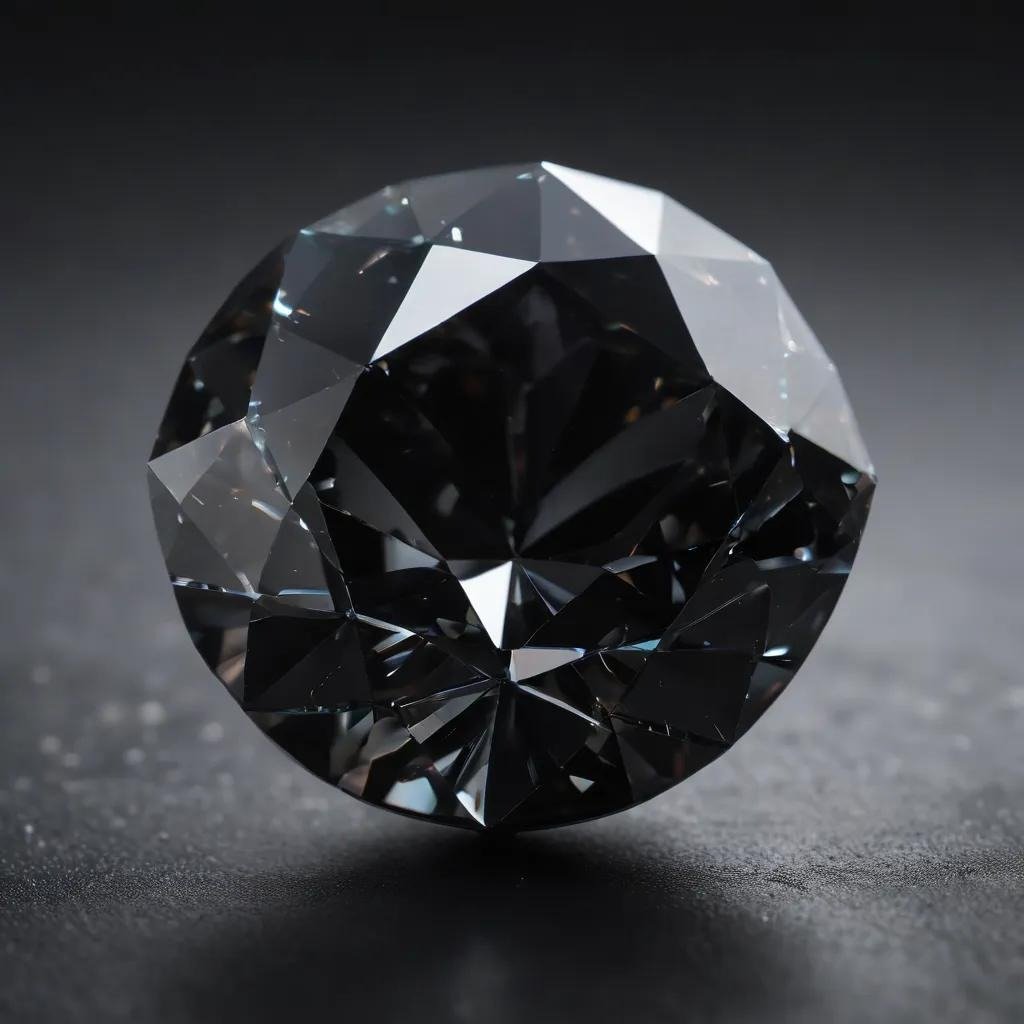
Black diamonds
Can suggest mystery, boldness, individuality, or modern sophistication. Their visual effect often contrasts with traditional ideas of purity and transparency.
These examples describe common design interpretations rather than definitive meanings. A blue diamond may symbolize family heritage for one person and simply be a preferred color for another.
Diamond Symbolism in Architecture and Design
Diamond geometry appears in architecture, textiles, decorative arts, and product design. Its angular structure can create a sense of rhythm, symmetry, and visual stability.
In architecture, diamond-shaped patterns may appear in facades, windows, latticework, flooring, or decorative panels. Their significance depends on the architectural tradition and the design’s broader context.
In graphic design, a diamond outline can be used to organize information or suggest a premium product. Repeated diamond patterns can create visual movement, while a single central diamond can direct attention toward a focal point.
How Designers Can Use Diamond Symbolism Effectively
A designer can begin by identifying the intended message.
- For trust and durability, use a restrained geometric diamond and clear typography.
- For romance, combine the gemstone with imagery that communicates affection or shared experiences.
- For luxury, focus on craftsmanship, spacing, material quality, and careful composition rather than relying only on a diamond icon.
- For innovation, use an abstract diamond form that suggests structure, precision, or transformation.
The main principle is consistency. The shape, color, typography, and surrounding imagery should reinforce the same message.
A diamond symbol alone cannot make a brand trustworthy or premium. Those perceptions also depend on the quality of the product, customer experience, and credibility of the business.
Diamond Symbolism in Philosophy: Outer Value Versus Inner Worth
The diamond offers a useful philosophical way to examine the relationship between appearance, value, and identity.
Because diamonds are admired for their brilliance, they can symbolize the desire to be recognized or appreciated. Yet the emphasis on rarity and prestige can also encourage questions about materialism and social status.
Is a Diamond Valuable Because It Is Rare?
Not entirely. A diamond’s market value is influenced by several factors, including its physical characteristics, supply, demand, grading, craftsmanship, and commercial context.
Its symbolic value is different. A family diamond may be priceless to its owner because of its history, even if it would not command an exceptional market price.
This distinction reveals two different meanings of value:
- Market value: What someone is willing to pay under particular conditions.
- Personal or symbolic value: What an object means within a person’s life, relationships, or culture.
The two can overlap, but neither determines the other completely.
The Diamond as a Metaphor for Human Potential
The idea that a person is like a diamond can suggest that qualities such as courage, wisdom, and kindness deserve recognition. A hidden diamond can represent overlooked potential, while a polished diamond can symbolize the development of a skill through learning and experience.
The metaphor becomes more useful when it focuses on growth rather than perfection. People do not need to be flawless to have value, and difficult experiences do not automatically make someone stronger.
In education and personal development, diamond symbolism can encourage learners to recognize their capabilities, refine their skills, and appreciate the different strengths that people bring to a community.
Diamond Symbolism in Education and Storytelling
Educators and storytellers can use diamonds to explain abstract ideas through concrete visual examples.
In Education
A diamond image can represent achievement, perseverance, or the careful development of knowledge. Teachers might use it as a visual prompt for discussions about material properties, geology, cultural history, economics, or symbolism.
A classroom activity could ask students to compare a diamond’s scientific properties with its cultural meanings. Students might identify which claims are observable facts, which are historical interpretations, and which are personal beliefs.
This exercise develops critical thinking while demonstrating that one object can be studied through multiple disciplines.
In Storytelling
Writers can use a diamond as a recurring symbol that changes meaning as a story develops.
For example, a character might initially regard a diamond as proof of wealth. Later, after learning about the person who owned it before them, the character may understand it as a reminder of sacrifice, family responsibility, or a difficult choice.
The physical object remains the same, but the character’s interpretation changes. This creates symbolic depth without requiring lengthy explanations.
For a visual story, the same diamond could appear in different settings: displayed in a luxury store, held by a family member, and eventually placed in a meaningful personal keepsake. Each scene adds context.
Did You Know? Facts About Diamond Symbolism
Diamonds are made of carbon
Diamond is a crystalline form of carbon. Its atomic structure helps explain its exceptional hardness.
Brilliance depends on more than the material
A diamond’s cut affects how light travels through the stone and contributes to its visual brightness and sparkle.
Diamond symbolism extends beyond romance
Religious texts, philosophical writing, commercial branding, and family traditions can give diamonds meanings unrelated to engagement or marriage.
A diamond shape is not always a diamond symbol
A geometric diamond or rhombus may have its own cultural, decorative, mathematical, or heraldic meaning. Context determines the interpretation.
Expert Tip: How to Interpret Diamond Symbolism Correctly
When interpreting a diamond in a story, artwork, dream, advertisement, or personal object, consider three levels of meaning.
First, examine the physical qualities. Is the diamond brilliant, dark, damaged, hidden, or prominently displayed? These features can influence its role in the image or narrative.
Second, consider the cultural context. Does the setting involve a wedding, a royal collection, a religious text, a family inheritance, or a luxury advertisement? Each context activates different associations.
Third, examine the personal meaning. What does the diamond mean to the person who owns it or encounters it? Their memories and experiences may matter more than a general symbolism guide.
This approach combines semiotics, cultural analysis, and close observation. It avoids treating a symbol as if it had one fixed meaning in every situation.
Common Mistakes When Interpreting Diamond Symbolism
Diamond symbolism becomes more meaningful when its limitations are understood. Several common mistakes can lead to oversimplified or misleading interpretations.
- Assuming diamonds always represent love. Diamonds can also signify authority, wealth, wisdom, resilience, or social status.
- Treating spiritual beliefs as scientific facts. Claims about gemstone energy, destiny, or supernatural protection should be identified as beliefs rather than established evidence.
- Confusing hardness with indestructibility. Diamonds resist scratching exceptionally well, but they can still fracture or chip.
- Assuming every culture interprets diamonds identically. Symbolic meanings develop through particular histories, customs, and belief systems.
- Equating price with emotional significance. An affordable keepsake can carry greater personal meaning than an expensive gemstone.
- Ignoring ethical and environmental context. Modern discussions of diamonds may include mining conditions, labor practices, environmental effects, and the distinction between natural and laboratory-grown stones.
Avoiding these mistakes makes diamond symbolism more useful for research, creative work, education, and everyday interpretation.
Myth vs. Fact: Understanding Diamonds
| Myth or assumption | More accurate interpretation |
| Diamonds guarantee eternal love. | They symbolize commitment in many traditions, but healthy relationships depend on people’s actions. |
| Diamonds cannot be broken. | They are exceptionally hard but can fracture or chip. |
| Diamonds automatically bring good fortune. | This is a spiritual or cultural belief, not an established scientific fact. |
| Diamonds have the same meaning worldwide. | Their meanings vary with cultural, religious, historical, and personal contexts. |
| A more expensive diamond expresses greater love. | Price and emotional commitment are separate measures. |
| A diamond must be colorless to be valuable or meaningful. | Diamonds occur in different colors, and preferences depend on context and individual taste. |
| All diamond symbolism is ancient. | Some meanings have long histories, while modern commercial associations developed through more recent social and marketing practices. |
Practical Applications of Diamond Symbolism
Diamond symbolism can be applied in a range of professional and personal settings.

1. Jewelry and meaningful gifts
Use diamond symbolism to communicate commitment, celebrate a milestone, or honor a family connection. Choose the meaning and design that suit the recipient rather than relying on price alone.

2. Branding and marketing
Diamond shapes can help communicate precision, premium positioning, or reliability. Ensure the symbol matches the brand’s real values and product quality.

3. Literature and creative writing
Introduce a diamond to explore themes such as greed, identity, hidden potential, family history, or the conflict between appearance and inner worth.

4. Architecture and graphic design
Use diamond geometry to create rhythm, symmetry, and a clear visual focal point. Research culturally specific patterns before borrowing them for decorative purposes.

5. Education and cultural research
Compare the science of diamonds with their religious, historical, economic, and artistic meanings to teach critical thinking and cultural awareness.
Key Insights: What Diamond Symbolism Teaches Us
The symbolism of diamonds demonstrates how physical objects acquire meanings that extend far beyond their material properties.
Their hardness supports metaphors of strength and endurance. Their brilliance inspires associations with clarity and illumination. Their commercial and historical prestige connects them with wealth and status. Their role in engagement customs has helped establish them as familiar symbols of romantic commitment.
Yet no single interpretation explains every diamond. A gemstone can represent devotion in one context, excessive materialism in another, and family continuity in a third.
The most useful approach is to interpret the diamond in relation to its setting, history, purpose, and personal significance. Doing so helps readers understand not only the gemstone itself but also the wider processes through which societies create and preserve symbolic meaning.
Frequently Asked Questions About Diamond Symbolism
1. What is the main symbolic meaning of a diamond?
The main symbolic meanings of a diamond are eternal love, strength, purity, clarity, commitment, and lasting value. Its exceptional hardness makes it a metaphor for endurance, while its brilliance supports associations with insight and beauty. In commercial settings, diamonds can also represent luxury, exclusivity, and achievement.
2. What does a diamond symbolize spiritually?
Spiritually, a diamond may symbolize clarity, wisdom, illumination, purity, and spiritual strength. In Buddhist contexts, diamond imagery can be associated with wisdom that cuts through illusion. Other religious and spiritual traditions have their own interpretations. These meanings are tradition-dependent and should not be treated as evidence that diamonds possess supernatural powers.
3. Why do diamonds symbolize eternal love?
Diamonds symbolize eternal love largely because of their durability and their established role in engagement and wedding customs. Their resistance to scratching provides a metaphor for endurance, while their perceived rarity and value can communicate that a relationship is treasured. The association was reinforced through historical customs and modern marketing, but a diamond itself cannot guarantee a lasting relationship.
4. What does a diamond symbolize in a dream?
A diamond in a dream can be interpreted as a personal symbol of self-worth, commitment, ambition, opportunity, or something precious to the dreamer. A lost diamond might prompt reflection on fear of losing something important, while receiving one could evoke recognition or affection. However, dream symbols have no universally established meanings, and there is no reliable scientific basis for treating a diamond dream as a prediction of future events.
5. What does a diamond symbolize in literature and art?
In literature and art, a diamond may represent wealth, power, hidden potential, moral temptation, purity, resilience, or the conflict between appearance and inner worth. Its meaning depends on the narrative and visual context. A diamond treasured by a family may symbolize heritage, whereas a stolen diamond in a mystery may represent greed, danger, or the consequences of obsession.
6. Does the color of a diamond change its symbolism?
Yes. Color can influence a diamond’s symbolic interpretation, although associations vary between cultures and individuals. Colorless diamonds often suggest simplicity and traditional elegance; blue diamonds may evoke calmness and trust; pink diamonds can suggest romance; yellow diamonds may communicate warmth; and black diamonds can convey mystery or individuality. These are common design associations, not universal psychological rules.
Conclusion: The Enduring Meaning of Diamond Symbolism
Diamond symbolism continues to influence how people understand love, strength, clarity, purity, wealth, wisdom, and lasting value. Its significance developed through a combination of physical properties, historical trade, cultural traditions, religious imagery, romantic customs, and modern marketing.
In relationships, diamonds can represent commitment and shared memories. In spiritual and philosophical contexts, they can suggest insight, discernment, or steadfastness. In literature and art, they can reveal conflicts between inner worth and outward appearance. In branding and design, they can communicate precision, luxury, or achievement.
Understanding these meanings requires a balanced perspective. A diamond’s physical characteristics can inspire powerful metaphors, but its symbolic associations are shaped by people and their cultures. Spiritual interpretations should not be mistaken for scientific evidence, and financial value should not be confused with personal worth.
Ultimately, diamond symbolism is important because it shows how a single object can communicate complex ideas across generations. Whether encountered in a family heirloom, a religious text, a novel, a logo, or an engagement ring, the diamond invites us to consider what we value, what we preserve, and what gives something lasting meaning.

