Peonies are admired for their abundant petals, rich colors, and graceful appearance, but their significance extends far beyond their beauty. Peonies symbolism is commonly associated with prosperity, romance, honor, good fortune, compassion, and a flourishing life. Across different cultures, these flowers have inspired stories about wealth, devotion, femininity, renewal, and the relationship between beauty and abundance.
The meaning of a peony depends on its cultural context, color, setting, and the person interpreting it. In Chinese art, peonies have a particularly strong association with prosperity and status. In contemporary Western floral traditions, they often communicate romantic affection, happiness, and a hopeful future. Their role in gardens, weddings, paintings, literature, and branding demonstrates how a natural object can acquire layers of cultural meaning over centuries.
Understanding peony symbolism helps explain why these flowers appear so frequently in celebrations, decorative arts, personal gifts, and visual storytelling. It also reveals how people use flowers to communicate emotions and values that ordinary language sometimes struggles to express.
What Is the Symbolism of Peonies? (Featured Snippet)
Peonies symbolize prosperity, good fortune, romance, honor, beauty, and abundance. Their full, layered blooms often represent a flourishing life, emotional richness, and the fulfillment of hopes. In Chinese cultural traditions, they are especially associated with wealth and status, while modern floral customs frequently connect them with love, happiness, marriage, and new beginnings.
What Do Peonies Symbolize?
Peonies have several interconnected symbolic meanings. Their interpretation can change depending on the flower’s color, cultural background, and the occasion on which it appears.

8
1. Prosperity and Abundance
One of the most recognizable meanings of peonies is prosperity. Their generous blooms, numerous petals, and impressive presence make them natural visual expressions of abundance.
In Chinese decorative traditions, the peony is strongly associated with wealth, honor, and flourishing circumstances. It frequently appears in paintings, textiles, ceramics, and other decorative objects where its presence communicates wishes for a prosperous life.
This symbolism is not limited to financial success. Abundance may also mean a loving household, fulfilling relationships, professional achievement, good health, or a life enriched by meaningful experiences.
For example, a peony arrangement in a reception area might communicate hospitality and success. A peony illustration on a celebratory card could express the hope that the recipient’s next chapter will be prosperous.
2. Love and Romance
Peonies are popular flowers for romantic occasions because their soft petals and rounded forms can evoke tenderness, affection, and emotional warmth.
Their symbolism can encompass several dimensions of love:
- Romantic attraction and affection.
- Commitment and the desire for a lasting partnership.
- Appreciation, tenderness, and emotional generosity.
- Hope for a happy shared future.
Pink peonies are especially common in romantic floral arrangements, although this association reflects contemporary floral conventions rather than a universal rule.
A bouquet of peonies can be a thoughtful gift for an anniversary, engagement, wedding, or personal celebration. Its message may be one of affection and optimism without the intensity or formality associated with some other flowers.
3. Honor, Prestige, and Social Status
Peonies have historically appeared in artistic settings associated with elegance, distinction, and high status.
Their substantial blooms and elaborate visual structure make them suitable symbols of prestige. In Chinese art, this association is especially prominent, and the flower has sometimes been described as a symbol of wealth and honor.
The meaning extends into contemporary design. A peony motif on premium packaging, formal invitations, or decorative stationery can suggest refinement, heritage, and attention to detail.
However, honor and status are cultural interpretations, not inherent qualities of the flower. Their significance comes from the ways communities have used and understood peonies over time.
4. Beauty and Femininity
The peony’s layered petals and rounded silhouette have made it an enduring image of beauty and elegance.
In some artistic and floral traditions, peonies are associated with femininity, grace, sensual beauty, and softness. These associations appear in fashion, illustration, wedding styling, and botanical decoration.
Yet beauty does not have to imply a particular gender. A peony can also represent artistic richness, confidence, individuality, or an appreciation of nature.
A balanced interpretation recognizes that cultural symbols can reflect historical ideas about gender while allowing modern audiences to assign broader and more personal meanings.
5. Happiness and Good Fortune
Peonies are frequently used to express wishes for happiness, favorable circumstances, and a positive future.
Their abundance and impressive blooms help explain this association: they offer a visual metaphor for life reaching a state of fullness.
In celebratory contexts, peonies may communicate congratulations, encouragement, and hope. They are particularly appropriate when someone begins a new chapter, such as a marriage, graduation, new home, or professional achievement.
It is important to distinguish this cultural symbolism from a factual claim. Peonies do not scientifically guarantee good fortune; their positive meaning is part of human tradition and interpretation.
6. Compassion, Healing, and Emotional Renewal
Peonies can also represent care, gentleness, and emotional renewal. These interpretations are especially natural in modern gift-giving, where flowers are chosen to communicate support or appreciation.
A peony arrangement might accompany a message of encouragement during a difficult period, or serve as a reminder to make room for rest, connection, and personal growth.
Some modern spiritual interpretations also associate peonies with emotional balance and heart-centered living. Such ideas belong to symbolic or spiritual belief systems rather than established medical evidence.
The flower’s role here is expressive: it helps a person communicate kindness and hope.
The Historical Origins of Peony Symbolism
The symbolism of peonies developed through centuries of cultivation, artistic representation, medicinal use, and cultural exchange. Although peonies have a long botanical history, their meanings emerged from the societies that admired, cultivated, painted, and incorporated them into everyday life.
Peonies in Ancient China
China occupies a central place in the cultural history of the peony. Tree peonies became particularly celebrated during the Tang dynasty (618–907), when appreciation for elaborate flowers flourished among aristocratic and courtly circles. The flower’s popularity continued through subsequent periods, becoming deeply embedded in Chinese decorative art and horticulture.

Matthaei Botanical Gardens & Nichols Arboretum
+1
The peony became known as the king of flowers, a title reflecting its visual grandeur and elevated cultural standing. Its association with wealth, rank, nobility, and good fortune made it a favored subject in paintings, ceramics, textiles, and other ornamental objects.
These meanings were reinforced by the flower’s appearance. Its abundant petals suggested fullness, while its impressive form and careful cultivation connected it with refinement and prestige.
In this context, a peony was more than an attractive botanical subject. It could communicate aspirations for prosperity, honor, beauty, and a flourishing household.
The Peony’s Journey to Japan
Peonies were introduced to Japan from China, initially for medicinal use, and later became valued as ornamental plants. By the Heian period (794–1185), they were being cultivated for their beauty in courtly and religious settings. Their popularity subsequently spread more widely, with dedicated cultivation and gardening literature appearing during the Edo period (1603–1868).
Digital Exhibitions
+1
In Japan, the peony, known as botan when referring to the tree peony, became associated with prosperity, honor, and auspicious fortune. It also found a lasting place in visual culture.
Peony designs appear in Japanese paintings, kimono patterns, decorative crafts, and other traditional art forms. Their meaning often depends on the surrounding imagery and the purpose of the artwork.
For example, a peony depicted with birds or butterflies may participate in a larger visual composition about beauty, abundance, or fortunate circumstances. It is important, however, not to assume that every artwork containing a peony communicates precisely the same message.
Peonies in Korea and Broader East Asian Art
Peony motifs also appear in Korean decorative traditions, including historical ceramics. The University of Michigan’s research on peonies documents their importance across Chinese, Japanese, and Korean cultural settings.

Matthaei Botanical Gardens & Nichols Arboretum
+1
Across these traditions, the flower’s associations with beauty, abundance, status, and good fortune overlap, but the artistic conventions are not identical.
The broader lesson is that cultural symbolism travels and changes. A motif can cross borders while acquiring new aesthetic features, local associations, and interpretations.
Peonies in Europe and North America
Peonies have their own history in Europe, where related species were cultivated for medicinal and ornamental purposes. However, Chinese ornamental peonies helped transform Western gardening after their introduction and wider adoption in the early nineteenth century. French horticulturalists played an important role in developing new varieties, and cultivation subsequently expanded in Europe and North America.

Matthaei Botanical Gardens & Nichols Arboretum
+1
As peonies became increasingly available to gardeners and florists, their visual appeal helped establish them as popular flowers for gardens, bouquets, and celebrations.
In nineteenth-century Victorian society, the language of flowers, or floriography, assigned symbolic messages to particular blooms. Peonies could be associated with wealth and good fortune, although historical flower dictionaries did not always agree about individual flowers’ meanings.
BBC Bitesize
+1
Today, peonies are frequently used to express love, happiness, elegance, and hopes for a prosperous future. These meanings reflect a mixture of older cultural traditions and contemporary floral conventions.
Peony Symbolism Across Different Cultures
The meaning of a peony is not universal. Its associations vary with cultural history, artistic context, and individual experience.
| Cultural context | Common symbolic associations | Typical expressions |
| Chinese traditions | Wealth, honor, nobility, prosperity, beauty | Decorative paintings, ceramics, textiles, celebratory imagery |
| Japanese traditions | Good fortune, prosperity, honor, elegance | Kimono designs, paintings, crafts, gardens |
| Korean decorative art | Beauty, abundance, auspicious imagery | Historical ceramics and ornamental motifs |
| Victorian floriography | Meanings varied by flower dictionary and context | Bouquets, floral messages, gift-giving |
| Contemporary Western floral customs | Romance, happiness, elegance, marriage | Wedding bouquets, anniversaries, special occasions |
| Modern personal spirituality | Growth, emotional renewal, abundance | Journaling, meditation imagery, personal art |
These categories are broad guides, not fixed rules. They describe recurring associations rather than the beliefs of every individual within a culture.

Digital Exhibitions
+3
Chinese Peony Symbolism: Wealth and Honor
In Chinese visual culture, the peony is especially associated with wealth, honor, beauty, and prosperity. Its historical connections with elite gardens and decorative arts helped establish its reputation as an auspicious flower.

University of Alberta Museums
+1
A peony motif on a decorative object may express a wish for a successful life or a prosperous household. In art, its significance can be strengthened by the other subjects around it.
The flower’s symbolism also illustrates how visual communication works: people learn to recognize shared meanings through repeated exposure to motifs in paintings, textiles, architecture, and everyday objects.
Japanese Peony Symbolism: Fortune and Artistic Elegance
In Japan, peonies combine associations with good fortune and honor with a long tradition of artistic appreciation.
Their appearance in decorative crafts and clothing demonstrates that flowers can serve as both natural subjects and cultural signs. A peony motif may be selected because of its beauty, its auspicious associations, or both.
For designers, this distinction matters. Using a Japanese-inspired peony pattern without understanding its visual context may produce an attractive result, but informed research can help create a more respectful and meaningful design.
Victorian Flower Language: The Meaning Depends on the Source
Victorian floriography treated flowers as a vocabulary for expressing sentiments that might otherwise remain unspoken. A bouquet could convey affection, admiration, or other messages through its flowers and arrangement.
However, the system was never perfectly standardized. Different books and traditions could assign different meanings to the same flower.
BBC Bitesize
+1
For this reason, it is misleading to present a single Victorian meaning for peonies as if every nineteenth-century source agreed on it.
Modern Global Interpretations
In contemporary global culture, peonies are often used for weddings, luxury floral arrangements, gifts, and decorative design. Their associations with romance, beauty, prosperity, and celebration make them adaptable to many occasions.
A person choosing peonies for a wedding may be thinking about love and a happy future, while a designer using them in a premium product package may be emphasizing elegance and abundance.
Both interpretations are meaningful, even though they arise from different contexts.
The Symbolism of Peony Colors
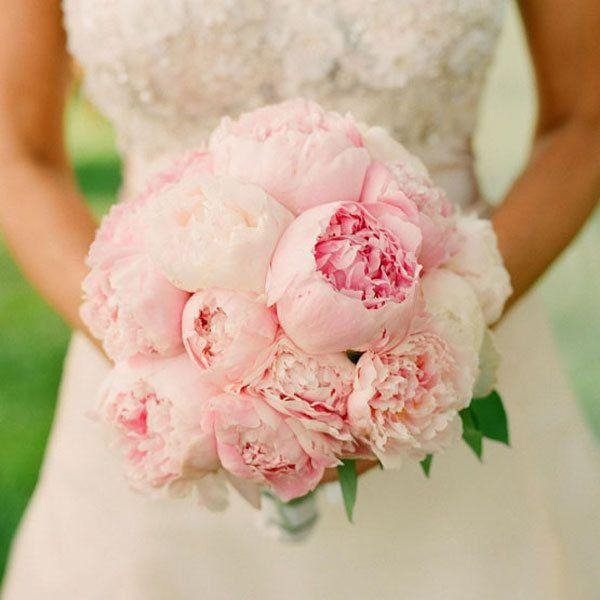
Peony color symbolism is particularly useful in floral design and gift-giving. However, color meanings are cultural conventions rather than universal laws. The flower’s specific shade, surrounding colors, occasion, and recipient can all influence its message.
5
| Peony color | Common modern interpretation | Suitable contexts |
| Pink | Romance, affection, tenderness, happiness | Weddings, anniversaries, thoughtful gifts |
| White | Sincerity, grace, remembrance, simplicity | Formal arrangements, reflective occasions |
| Red | Passion, vitality, honor, prosperity | Celebrations, bold decorative designs |
| Coral or peach | Warmth, optimism, appreciation | Thank-you gifts, celebrations, spring arrangements |
| Purple | Luxury, distinction, creativity | Premium branding, artistic floral arrangements |
| Yellow or golden tones | Cheerfulness, warmth, prosperity | Bright seasonal displays and celebratory designs |
These associations are interpretive guides, not a universal flower dictionary. A white peony, for instance, may express elegance at one event and remembrance at another.
Pink Peonies: Romance and Affection
Pink peonies are frequently chosen for romantic arrangements because their soft coloring complements their full, rounded blooms.
They can communicate tenderness, appreciation, and a hopeful outlook. In wedding design, pink peonies may help create an atmosphere of warmth and celebration.
Their message does not need to be exclusively romantic. Pink flowers can also express gratitude, friendship, or affection within a family.
White Peonies: Grace and Sincerity
White peonies often suit minimalist arrangements and formal settings. Their light coloring can emphasize purity of design, quiet elegance, and sincerity.
Depending on the context, white flowers may also be used for remembrance or reflection. Their interpretation should take account of the recipient’s culture and the nature of the occasion.
Red Peonies: Passion and Prosperity
Red peonies have a particularly strong visual presence. In Chinese-inspired decorative settings, red and other rich colors can reinforce associations with celebration, status, and good fortune.
In modern floral design, red peonies may also communicate passion, confidence, and vitality.
Their meaning is shaped by more than color alone: the arrangement, setting, and cultural symbolism of red all influence the overall effect.
Purple Peonies: Luxury and Distinction
Purple peonies can create a sense of depth and refinement. Purple is frequently associated in contemporary design with creativity, luxury, and individuality, although these associations differ between cultures and historical periods.
A designer may choose purple peonies for a premium floral installation because their unusual appearance feels distinctive rather than conventional.
Coral and Peach Peonies: Warmth and Appreciation
Coral and peach-colored peonies often work well in friendly, celebratory arrangements. Their warm appearance can suggest optimism, gratitude, and emotional generosity.
They may be especially suitable for occasions when the intended message is affectionate without being strongly romantic.
Spiritual Meaning of Peonies
Peonies have spiritual interpretations in some contemporary belief systems, where they are used as symbols of abundance, personal growth, emotional openness, and gratitude. These interpretations are best understood as cultural or personal meanings rather than universal religious teachings.
Peonies as Symbols of Abundance
In spiritual and reflective practices, abundance can mean more than financial wealth. It may include meaningful relationships, creativity, opportunities, inner peace, and appreciation for everyday life.
A peony painting placed in a meditation space, for example, might serve as a reminder to recognize what is already flourishing and to remain open to new possibilities.
This interpretation builds on the flower’s established cultural association with prosperity, while extending that meaning into personal reflection.
Peonies and Emotional Growth
The peony’s layered petals can inspire a metaphor for emotional complexity. Just as the flower unfolds into a full bloom, people may gradually develop greater self-awareness, confidence, and understanding.
This is a modern interpretive metaphor rather than a scientifically established psychological effect.
Someone using a peony in a journal illustration might associate it with a period of personal growth, a new beginning, or the decision to approach relationships with greater kindness.
Peonies in Feng Shui
In Feng Shui traditions, flowers may be incorporated into environments to support particular symbolic intentions. Peonies are often associated in popular interpretations with romance, prosperity, and positive relationships.
People may choose peony artwork for a bedroom, living area, or decorative display because of these associations.
It is important to distinguish the traditional symbolism of an object from evidence of a measurable outcome. A peony image may provide personal meaning and contribute to a pleasing environment, but there is no reliable scientific basis for claiming that displaying one guarantees romantic success or financial prosperity.
Do Peonies Have Religious Significance?
Peonies do not have one universal religious meaning. Their significance depends on the religious community, artistic tradition, and context in which they appear.
In some East Asian cultural settings, peonies appear in art associated with temples, gardens, and broader traditions of auspicious imagery. Their presence may reflect cultural appreciation of the flower as well as the beliefs or aesthetic preferences of the people who commissioned the artwork.

Digital Exhibitions
+1
In Christianity, peonies are not a universally prescribed symbol with a single authoritative meaning. Nevertheless, individual artists and contemporary floral designers may use them to express beauty, gratitude, hope, or celebration.
Likewise, in other religious settings, a peony may be meaningful because of its role in a particular community’s art or personal practice rather than because it has a fixed theological interpretation.
The key distinction: a flower can carry religious, cultural, and personal significance without having an officially established meaning across an entire faith.
Peonies in Art, Literature, and Mythology
12
Peonies in Traditional Art
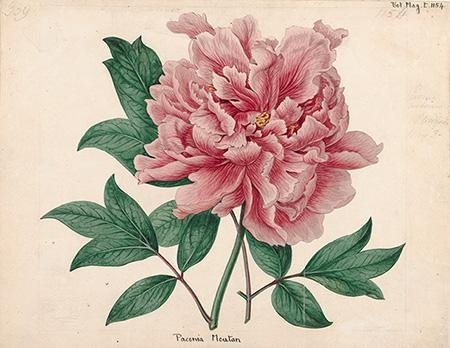
Peonies have been an important subject in East Asian visual culture for centuries. Chinese and Japanese artists have depicted them in paintings and decorative objects, while the motif has also appeared in textiles and ceramics.

Kyoto National Museum
+2
Their visual qualities make them especially expressive subjects:
- Layered petals create complexity and a sense of fullness.
- Large blooms establish a strong focal point.
- Rich colors attract attention and establish mood.
- Leaves and stems provide structure and visual movement.
These features are not merely decorative. When an artist chooses a peony to represent prosperity or honor, the flower’s visual abundance reinforces the intended meaning.
Peonies in Literature
In literature, flowers often work as symbols rather than simply objects in a scene. A peony might help establish an atmosphere of luxury, communicate attraction, or contrast external beauty with a character’s private emotions.
For example, a novelist might describe a lavish peony garden at the beginning of a story about a wealthy family. The garden could suggest status and prosperity while also preparing the reader to question whether material comfort guarantees happiness.
Another writer might use a peony that opens in spring to suggest renewal after a period of uncertainty.
These are possible literary techniques, not claims about the meaning of any particular published work.
Peonies and Mythological Stories
Many flowers have accumulated legends explaining their origins, appearance, or symbolic qualities. Peonies also feature in different stories and popular retellings, but these accounts should not be treated as one universally accepted myth.
The Greek name Paeonia is associated with Paeon, a figure in ancient Greek mythology connected with healing. Later accounts and modern retellings sometimes blend botanical history, classical mythology, and folklore into a single narrative.
When using such stories in educational or editorial content, it is important to distinguish an ancient source from a later retelling. A story repeated online is not necessarily an authenticated ancient tradition.
The Psychology and Semiotics of Peonies
Why do peonies communicate ideas such as abundance, romance, and elegance so effectively?
Part of the answer lies in semiotics, the study of signs and how they create meaning.
How a Flower Becomes a Symbol
A peony is first a living plant. Through repeated appearances in art, ceremonies, literature, and decorative design, it can become associated with particular ideas.
This process can be understood through three layers:
- The physical object: the actual flower, with its petals, fragrance, color, and form.
- The cultural association: meanings such as prosperity or romance that communities attach to it.
- The personal interpretation: what the flower means to an individual based on memory, experience, or intention.
These layers interact. A person who receives peonies at a memorable celebration may later associate the flower with that experience, even if their personal interpretation differs from the cultural symbolism commonly attributed to it.
Color, Shape, and Visual Communication
Designers use color, shape, scale, and composition to influence how an image is perceived. Peonies offer several useful visual qualities.
Their rounded blooms can make a composition feel full and balanced. Dense petals create texture, while contrasting foliage introduces structure. A cluster of flowers can communicate abundance more readily than a single small bloom.
These observations describe visual design principles, not a guarantee that every viewer will feel the same emotion.
Expert Tip: When using peonies in visual communication, begin with the message you want to convey. Select the color palette, surrounding imagery, and arrangement to reinforce that message instead of assuming that the flower alone will communicate it.
Practical Applications of Peony Symbolism
Peony symbolism is useful wherever visual imagery helps people communicate feelings, values, or intentions.
1. Wedding and event design
Peonies can represent love, happiness, prosperity, and hopes for a flourishing partnership. They work well in bouquets, table arrangements, invitations, and celebratory backdrops.
2. Branding and packaging
A peony illustration can suggest refinement, heritage, beauty, or abundance. Luxury and beauty brands may use floral imagery to create an elegant visual identity, provided the design suits their audience.
3. Art and interior decoration
Peony motifs can introduce cultural references, visual richness, and botanical beauty into wall art, ceramics, fabrics, and home décor.
4. Greeting cards and personal gifts
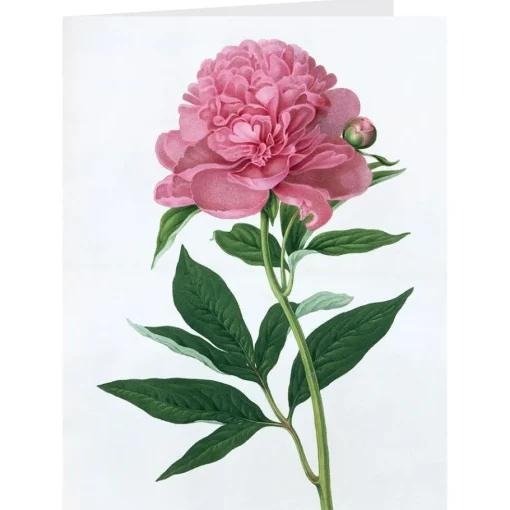
Peonies can help communicate affection, appreciation, congratulations, and optimism. A handwritten message makes the intended meaning clearer and more personal.
Using Peonies in Digital Communication
In digital design, peonies appear in social media graphics, wedding websites, digital invitations, profile banners, and illustrations.
Their large blooms can work particularly well in layouts where a single image needs to establish a strong visual identity.
For example, a wedding website might combine pale pink peonies, restrained typography, and generous white space to communicate romance and elegance. A cultural heritage project might instead use a traditional peony motif to emphasize historical context.
In both cases, effective design connects the image to the audience, the message, and the purpose of the communication.
Did You Know? Facts About Peonies
-
Peonies have a long cultivation history. In China, they were valued for medicinal uses before ornamental cultivation became especially prominent.
Matthaei Botanical Gardens & Nichols Arboretum
+1 -
The peony is known as the “king of flowers” in Chinese cultural tradition. The title reflects its celebrated beauty and elevated status in art and horticulture.
Digital Exhibitions
+1 -
Peonies are not all the same type of plant. Tree peonies and herbaceous peonies differ in their growth habits, and their horticultural history includes extensive selective breeding.
Matthaei Botanical Gardens & Nichols Arboretum
+1 -
Flower meanings can change over time. The symbolic interpretations found in historical flower dictionaries do not always match contemporary floral customs.
BBC Bitesize
+1
Common Mistakes When Interpreting Peony Symbolism
Understanding peonies requires more than memorizing a list of meanings. Several common mistakes can lead to inaccurate interpretations.
Mistake 1: Assuming Every Culture Gives Peonies the Same Meaning
Peonies have particularly strong historical associations with prosperity and honor in Chinese art, but their interpretation elsewhere may emphasize romance, beauty, or other qualities.
Better approach: Identify the cultural tradition and context before assigning a meaning.
Mistake 2: Treating Color Meanings as Universal Rules
Pink does not always mean romance, and white does not always mean purity or remembrance. Color associations vary according to context and personal experience.
Better approach: Treat color symbolism as a guide, not a fixed code.
Mistake 3: Confusing Symbolism With Scientific Evidence
A peony may symbolize healing or emotional renewal to an individual, but this does not establish that the flower can treat a medical condition or produce a specific psychological outcome.
Better approach: Distinguish metaphor, personal belief, cultural tradition, and evidence-based claims.
Mistake 4: Repeating Historical Legends Without Checking Their Origins
Popular accounts sometimes combine separate legends or present modern interpretations as ancient facts.
Better approach: Consult credible botanical, museum, historical, or academic sources when making specific historical claims.
Myth vs. Fact: Peony Symbolism
| Myth or misconception | More accurate explanation |
| Peonies always represent romantic love. | Romance is one common interpretation, but prosperity, honor, and beauty are also important associations. |
| Peonies guarantee wealth or good luck. | They symbolize prosperity and fortune in some traditions; they do not guarantee real-world outcomes. |
| Every peony color has a universal meaning. | Color associations vary by culture, setting, and individual interpretation. |
| Peonies have one fixed religious meaning. | Their religious significance depends on the community and context. |
| Peony symbolism has never changed. | Meanings evolve as flowers move between cultures, artistic traditions, and historical periods. |
Frequently Asked Questions About Peonies Symbolism
1. What do peonies symbolize spiritually?
Peonies are sometimes interpreted spiritually as symbols of abundance, growth, emotional openness, gratitude, and renewal. These meanings draw on broader cultural associations with prosperity and flourishing. Spiritual interpretations vary, however, and should not be confused with established scientific findings or universal religious teachings.
2. Why are peonies associated with wealth and prosperity?
Peonies are associated with wealth and prosperity particularly in Chinese cultural traditions. Their impressive blooms and historical popularity among elite and aristocratic circles helped establish them as symbols of abundance, honor, and status. These associations became established through centuries of cultivation, literature, and decorative art.

University of Alberta Museums
+1
3. What does a pink peony symbolize?
A pink peony commonly represents affection, romance, tenderness, happiness, and appreciation in contemporary floral traditions. It is frequently used in wedding bouquets, anniversary arrangements, and gifts. Its precise meaning depends on the occasion, the relationship between the giver and recipient, and the cultural context.
4. What does a white peony mean?
White peonies can symbolize grace, sincerity, simplicity, and elegance. Depending on the setting, they may also be used in arrangements associated with remembrance or reflection. Their meaning is not universal, so the intended message should be considered alongside the occasion and local customs.
5. What do peonies symbolize in Chinese culture?
In Chinese culture, peonies are widely associated with prosperity, wealth, honor, nobility, beauty, and good fortune. They are celebrated in traditional paintings, textiles, ceramics, and decorative arts. Their reputation as the “king of flowers” reflects their longstanding importance in Chinese artistic and horticultural traditions.

Digital Exhibitions
+1
6. Are peonies suitable for weddings and anniversaries?
Yes. Peonies are popular choices for weddings and anniversaries because their modern floral associations include romance, happiness, beauty, and a flourishing future. Their full blooms also make them visually striking in bouquets and event arrangements. Choosing a color and style that suits the couple’s preferences can make the flowers more personally meaningful.
Key Insights: Why Peony Symbolism Still Matters
Peonies symbolism remain meaningful because they bring together natural beauty, cultural memory, and human emotion. Their historical association with prosperity and honor, particularly in Chinese art, continues to influence contemporary interpretations of the flower. Meanwhile, modern floral customs frequently use peonies to express romance, appreciation, happiness, and hope.
Their significance extends into design, literature, branding, celebrations, and personal expression. In each setting, the flower works as a visual sign whose meaning depends on context.
Understanding peony symbolism therefore requires both historical awareness and interpretive flexibility. The flower can express a shared cultural tradition, communicate an intended message, or hold a deeply personal meaning for an individual.

