Orchid symbolism has fascinated people for centuries because these distinctive flowers can communicate ideas that go far beyond beauty. Associated with love, elegance, refinement, strength, fertility, luxury, and personal growth, orchids occupy a special place in floral traditions, art, literature, spirituality, and modern design.
Their meanings depend on flower color, cultural background, personal experience, and the occasion on which an orchid is given. Understanding orchid symbolism helps explain why these flowers remain meaningful gifts and powerful visual symbols around the world.
Featured-snippet answer: What does an orchid symbolize?
Orchids commonly symbolize love, beauty, elegance, strength, refinement, and rare achievement. Depending on their color and cultural context, they may also represent fertility, admiration, luxury, innocence, or spiritual growth. Their distinctive appearance and remarkable adaptations have made them enduring symbols of individuality, resilience, and the beauty of things that are uncommon or carefully cultivated.
1. The Core Meaning of Orchid Symbolism
Orchids are often associated with qualities that seem both delicate and powerful. Their elaborate flowers suggest elegance and refinement, while their adaptations to different environments make them interesting symbols of resilience and survival.
The most common interpretations of orchid symbolism include:
- Love and affection: Orchids can express romantic interest, admiration, and appreciation.
- Beauty and elegance: Their distinctive shapes and intricate structures are associated with sophistication.
- Strength and resilience: Many orchids survive in specialized environments through remarkable biological adaptations.
- Luxury and refinement: Their striking flowers and the care involved in cultivating some varieties have connected them with prestige.
- Fertility and abundance: Historical associations between orchids and reproduction contributed to their symbolic relationship with fertility.
- Individuality and rarity: Their extraordinary diversity makes orchids useful symbols of uniqueness and personal identity.
- Growth and transformation: Their development from seed to flowering plant can represent patience, change, and achievement.
These meanings are not universal rules. A white orchid in a wedding arrangement, for example, may communicate purity or elegance, while the same flower displayed in an office may suggest professionalism, calm, and refined taste.
Why do orchids symbolize beauty and elegance?
Orchids symbolize beauty and elegance largely because of their distinctive floral forms, intricate patterns, and wide variety of colors. Unlike flowers valued primarily for a simple, familiar shape, many orchids have unusual structures that appear carefully designed. In visual communication, this complexity can suggest sophistication, individuality, and attention to detail.
Their appearance also illustrates an important principle of semiotics: people interpret visual forms through both what they see and what their culture teaches them to associate with those forms.
An orchid’s graceful appearance does not inherently mean luxury or romance. Those interpretations emerge from a combination of cultural tradition, social experience, cultivation practices, and personal associations.
2. The History and Origins of Orchid Symbolism
Orchid symbolism developed through several distinct historical traditions. Ancient Mediterranean communities connected certain orchids with fertility, while Chinese literary and artistic traditions associated orchids with cultivated character and refined living. Later, European collectors helped establish orchids as symbols of rarity, prestige, fascination, and desire.
Ancient Greek beliefs about orchids
The English word orchid ultimately derives from the ancient Greek word orkhis, meaning “testicle.” The name referred to the paired tubers of certain terrestrial orchids.
Ancient Greek writers connected these roots with fertility and reproduction. Traditional beliefs suggested that consuming particular orchid tubers could influence the sex of a future child. These ideas reflect historical medical beliefs rather than scientifically established effects.
Ministry of Botany
+1
This association influenced the symbolic history of orchids in Europe. Their meanings became linked not only to physical beauty but also to desire, sexuality, fertility, and the continuation of family life.
It is important to distinguish this historical symbolism from modern botanical knowledge. Orchids belong to the flowering-plant family Orchidaceae, and their reproductive biology is complex. Their flowers have evolved specialized structures and relationships with pollinators, but those biological characteristics do not validate traditional claims about fertility treatments.
Orchids in Victorian society

11
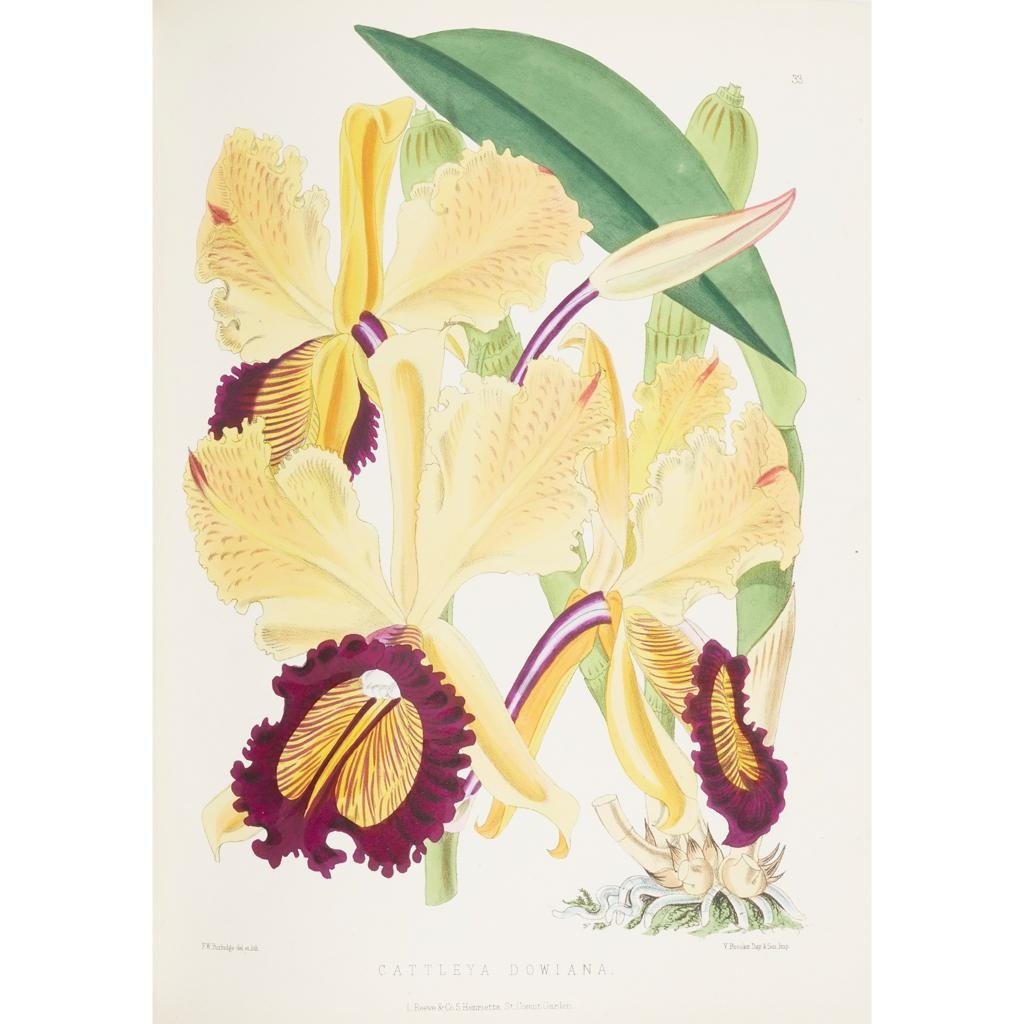
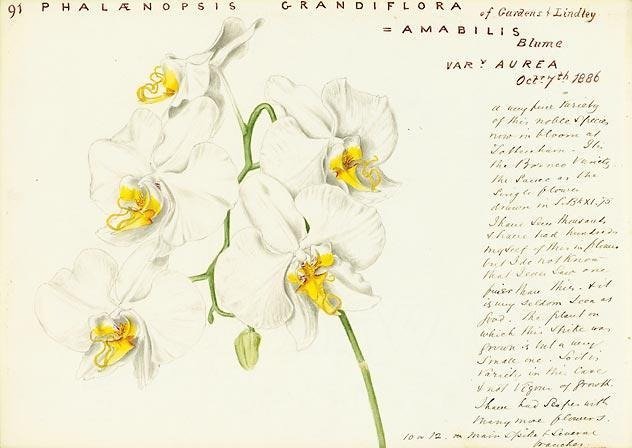
During the nineteenth century, orchids became fashionable among wealthy European collectors. Tropical species were difficult to transport and cultivate, and rare specimens could command substantial prices. Specialist nurseries, botanical illustrations, glasshouses, and collecting expeditions helped turn orchids into objects of scientific curiosity and social prestige.
RHS
+1
This period strengthened several modern interpretations of orchid symbolism:
- Luxury: Rare specimens became associated with wealth and exclusivity.
- Ambition: Collecting unusual plants demonstrated resources, expertise, and social standing.
- Mystery: Their unfamiliar shapes and specialized growing requirements fascinated observers.
- Desire: Their appearance and historical associations with reproduction contributed to their reputation as sensual flowers.
The Victorian obsession also had a complicated side. Collecting pressures and habitat disturbance harmed some wild orchid populations. The history of orchid appreciation therefore includes both botanical discovery and questions about conservation, colonial-era collecting, and the commercialization of nature.
RHS
+1
The language of flowers
In nineteenth-century Europe and America, the language of flowers, also called floriography, allowed people to communicate emotions through carefully selected bouquets.
Books published during this period assigned meanings to many different plants, although interpretations often varied between authors and editions. Floral messages could express affection, admiration, longing, or other sentiments that a person might hesitate to state directly.
RHS
+1
Orchids entered this wider culture of floral communication through associations with elegance, desire, and refinement. Their symbolism was never completely fixed, however. The meaning of a flower could depend on the species, the arrangement, the accompanying flowers, and the expectations of the recipient.
This historical context explains why orchids remain popular for anniversaries, formal celebrations, and sophisticated floral gifts.
3. Orchid Symbolism Across Different Cultures
Orchid symbolism varies considerably across cultures. A meaning that developed through European romantic traditions may differ from an interpretation rooted in East Asian literature or local botanical practices.
| Cultural context | Common symbolic associations | Historical or interpretive background |
| Ancient Greece | Fertility, reproduction, desire | Associations with orchid tubers and traditional medical beliefs |
| Traditional Chinese culture | Refined character, integrity, cultivated virtue | Literary and artistic traditions involving the orchid as a moral symbol |
| Japanese artistic traditions | Simplicity, natural beauty, disciplined expression | Ink painting and broader traditions of appreciating restrained natural forms |
| Victorian Europe | Luxury, desire, rarity, prestige | Collecting culture, floriography, and the popularity of exotic plants |
| Contemporary Western culture | Love, elegance, admiration, achievement | Floral gifting, interior decoration, weddings, and commercial design |
| Contemporary global design | Sophistication, individuality, exclusivity | Visual branding, hospitality, fashion, and luxury aesthetics |
These categories are broad interpretations, not universal beliefs held by everyone within a culture.
Orchid symbolism in Chinese culture
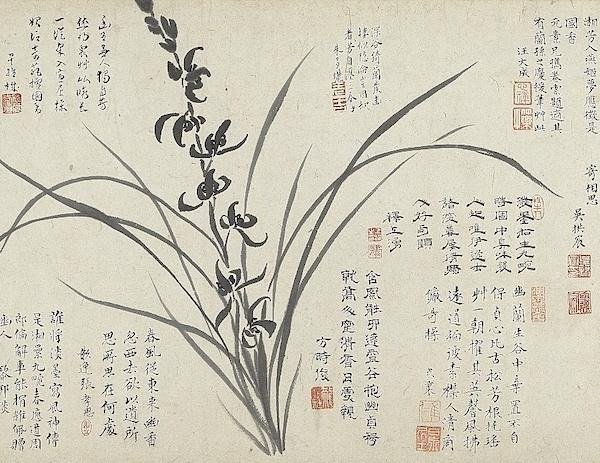
In traditional Chinese culture, the orchid—often referred to as lan in classical contexts—has a long history in poetry, cultivation, and painting.
Orchids became associated with qualities such as integrity, refinement, and cultivated character. Their significance is especially clear in the literati tradition, where painting plants was not simply a way to reproduce their appearance. The artist’s brushwork could also communicate discipline, sensitivity, and moral character.
Historical research on Chinese orchid cultivation documents its development across different dynasties, including the Song and Ming periods.
ScienceDirect
+1
The orchid’s meaning here differs from the Western emphasis on expensive exotic flowers. Rather than representing material wealth alone, it can evoke a person’s inner qualities.
For example, an orchid painting may be appreciated as an expression of restraint and artistic cultivation, even when it contains no reference to romance or luxury.
Orchid symbolism in Japanese art
In Japanese art, orchid imagery can be understood through the broader traditions of ink painting, botanical observation, and restrained composition.
Orchid leaves and flowers offer artists opportunities to explore line, movement, empty space, and balance. A few carefully placed brushstrokes can suggest a plant without reproducing every botanical detail.
This artistic approach can support interpretations of simplicity, discipline, natural beauty, and quiet refinement. These associations should be understood within the particular artwork and tradition rather than treated as a single meaning shared by all Japanese people.
Orchid symbolism in Western culture
In Western cultures, orchids are frequently used to communicate sophistication, affection, admiration, and luxury.
Their popularity grew through European collecting traditions, floral gifting, and the development of commercially cultivated varieties. Today, an orchid may appear in a home, hotel lobby, wedding venue, office, or luxury retail space.
The meaning changes with its setting. In a romantic gift, an orchid can express admiration. In a professional reception area, it may communicate care, elegance, and attention to the environment.
Orchid symbolism in South Asian contexts
In South Asia, including Pakistan and India, orchids may be used in modern floral arrangements, gifts, weddings, and decorative spaces. Their symbolic meaning often overlaps with international conventions surrounding beauty, elegance, affection, and celebration.
However, there is no single, historically uniform South Asian orchid symbolism. Local flower customs, religious traditions, regional practices, and personal preferences differ widely.
An orchid given as a gift may simply communicate appreciation or good wishes without carrying any formal religious meaning. When choosing orchids for a culturally significant event, the recipient’s preferences and the customs of the specific occasion matter more than assuming that the flower has one universal interpretation.
4. The Symbolism of Different Orchid Colors
Color can influence how an orchid is interpreted. The associations below are common contemporary conventions, not universal or scientifically established meanings.
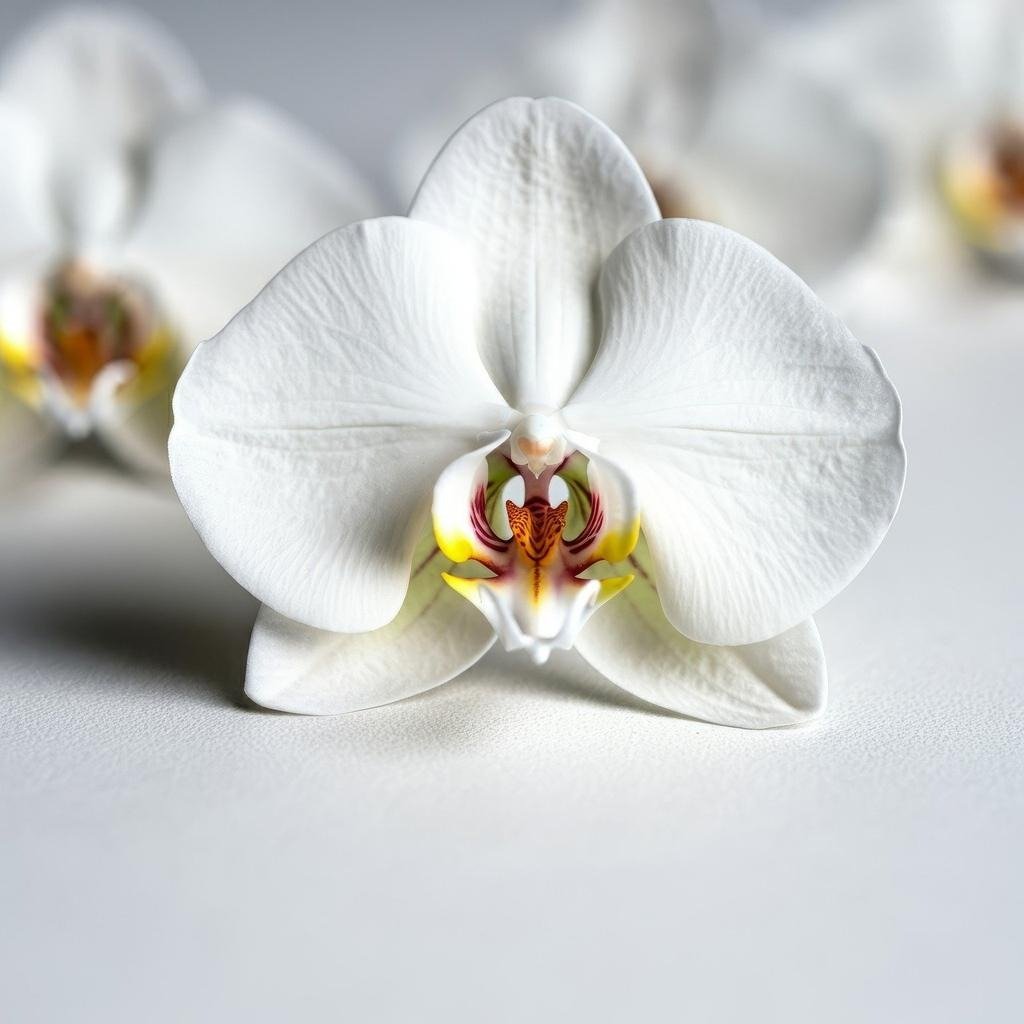
White orchid symbolism
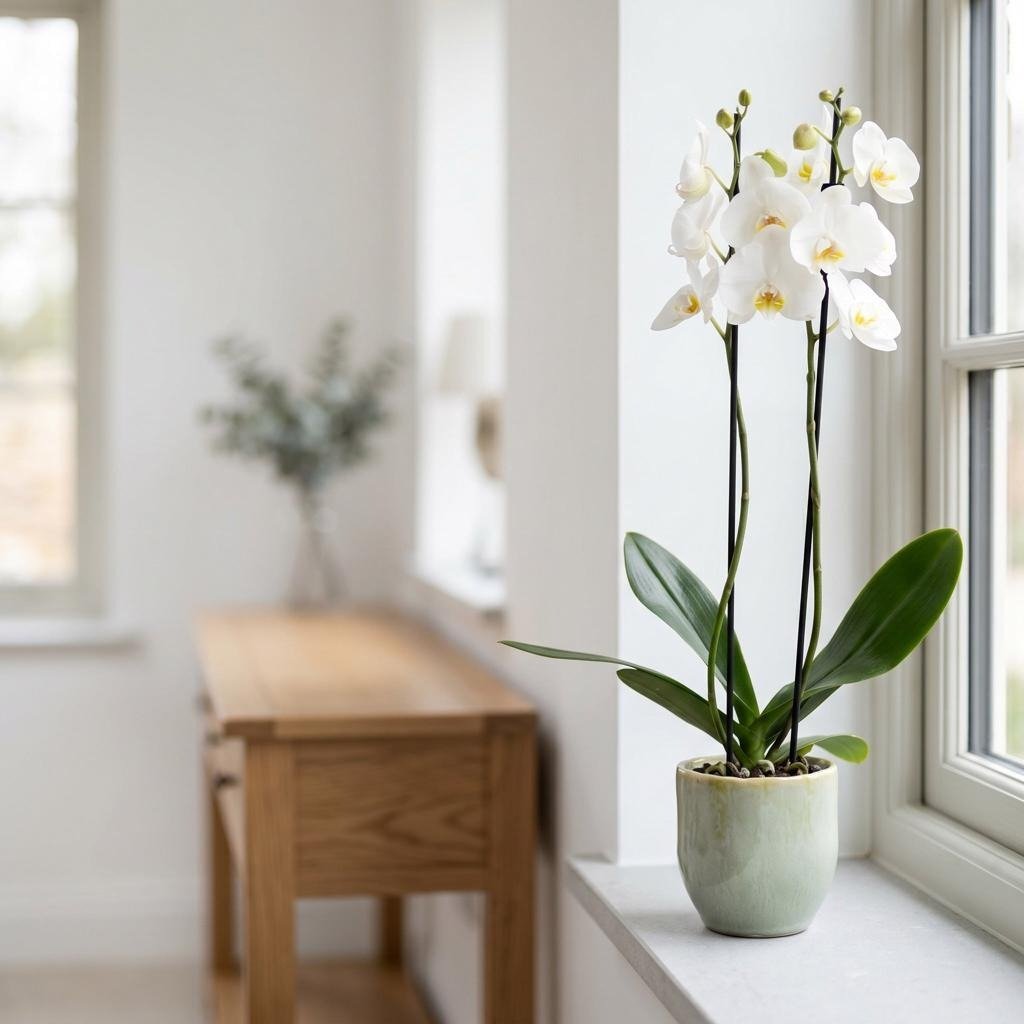
White orchids commonly suggest elegance, sincerity, peace, and fresh beginnings. They work well in weddings, formal arrangements, and settings where a calm, refined appearance is desired.
Common themes: purity, peace, grace, new beginnings.

Pink orchid symbolism
Pink orchids often communicate affection, tenderness, appreciation, and gentle admiration. Their softer color makes them suitable for birthdays, thoughtful gifts, and expressions of gratitude.
Common themes: affection, appreciation, warmth.

Purple orchid symbolism
Purple orchids are frequently associated with dignity, luxury, creativity, and distinction. Historically established associations between purple and prestige in some societies can reinforce this interpretation.
Common themes: dignity, prestige, individuality.
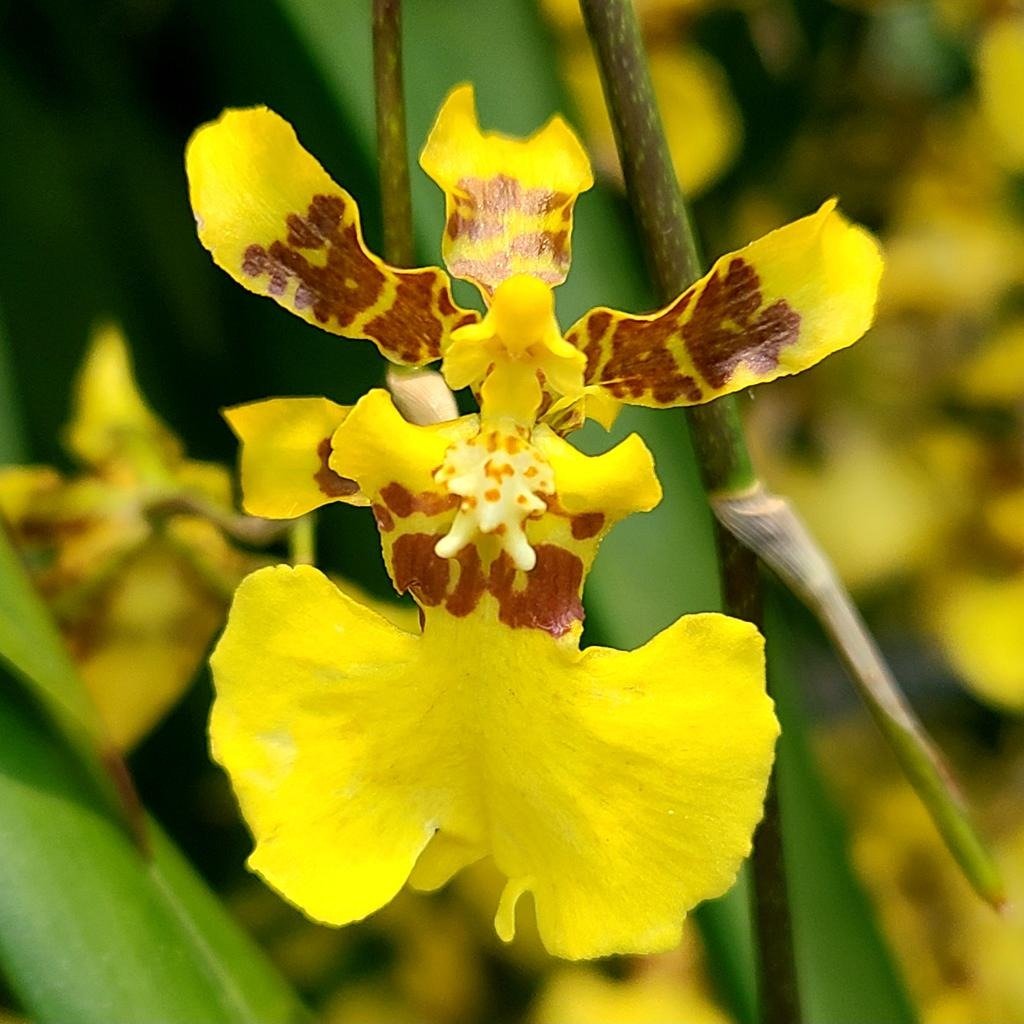
Yellow orchid symbolism
Yellow orchids can suggest optimism, friendship, warmth, and celebration. Their bright appearance can add energy to a room or communicate cheerful appreciation.
Common themes: friendship, optimism, joy.
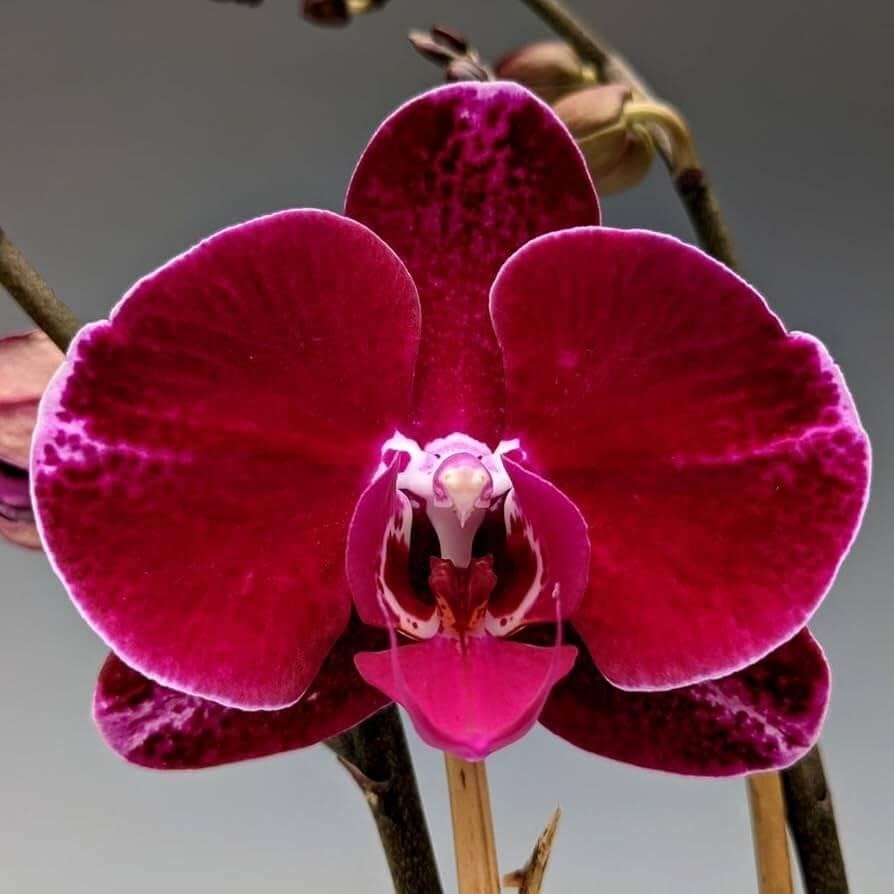
Red orchid symbolism
Red orchids can communicate passion, confidence, strong admiration, or romantic interest. The intensity of the color often makes it useful when a floral arrangement needs a bold focal point.
Common themes: passion, courage, strong affection.

Orange orchid symbolism
Orange orchids are often interpreted as energetic, enthusiastic, creative, and confident. They can bring a lively character to celebrations and contemporary floral designs.
Common themes: energy, enthusiasm, creativity.
Does orchid color change the flower’s meaning?
Yes, color can influence how an orchid is interpreted, particularly in contemporary floral gifting and design. However, color is only one part of its meaning. The occasion, relationship, cultural background, and presentation also matter.
A white orchid might be chosen for a formal celebration because of its understated appearance, while a purple orchid might be selected for a professional gift because it conveys distinction. Neither interpretation is mandatory, and the recipient may associate the same colors with entirely different experiences.
5. Orchid Symbolism in Love, Relationships, and Friendship
Orchids are popular gifts because they can communicate affection without relying on the familiar symbolism of roses. Their elegant appearance often makes them suitable for expressing admiration, appreciation, and thoughtful attention.
What does an orchid mean when someone gives you one?
Receiving an orchid commonly suggests that the giver wants to express appreciation, affection, admiration, or a wish to mark a special occasion. Its meaning depends on the relationship and circumstances rather than on the flower alone.
Here are some practical examples:
- Romantic relationships: An orchid can express attraction, admiration, or a desire to celebrate a relationship.
- Anniversaries: Its refined appearance and lasting presence as a living plant can make it a meaningful anniversary gift.
- Friendship: A yellow or pink orchid can serve as a thoughtful gesture of appreciation.
- Family celebrations: Orchids may communicate affection, respect, and good wishes.
- Professional relationships: A carefully chosen orchid can express gratitude or congratulations without being overly personal.
An orchid does not automatically indicate romantic love. If someone gives you one, the context, accompanying message, and nature of your relationship are more reliable guides to their intentions.
Orchid symbolism in marriage and weddings
Orchids frequently appear in wedding bouquets, table arrangements, ceremonial decorations, and anniversary displays.
Their symbolism fits weddings in several ways. Elegance relates to the visual atmosphere of the event, while love and admiration connect with the relationship being celebrated. The continued growth of a living orchid can also serve as a personal metaphor for a relationship that requires patience and care.
For a wedding, white orchids may complement a minimalist design, pink orchids may create a softer atmosphere, and purple orchids may introduce a more dramatic sense of sophistication.
These are design choices rather than universal rules about marriage or commitment.
Orchids as symbols of lasting affection
A potted orchid can be a particularly meaningful gift because it is a living plant rather than a temporary decorative object.
Its continued growth offers a natural metaphor for care over time. When a recipient looks after the plant, the experience may become associated with the person who gave it to them.
This interpretation is strongest as a personal or cultural metaphor. An orchid does not guarantee a lasting relationship, but it can provide a memorable way to express the intention to nurture one.
6. Orchid Symbolism in Spirituality and Personal Growth
Orchids are sometimes interpreted spiritually as symbols of balance, inner development, beauty, and the relationship between patience and achievement.
These interpretations arise from human reflection on the flower’s appearance and growth rather than from a single universal spiritual doctrine.
Do orchids symbolize spiritual growth?
In contemporary spiritual interpretations, orchids can represent personal development, awareness, patience, and the discovery of beauty in unexpected places.
Their complex flowers may remind an observer that outward appearances often conceal intricate structures. Their growth habits can also encourage reflection on adaptability and the importance of appropriate conditions for development.
Consider an orchid that struggles in one environment but flourishes when its light, moisture, and growing medium are adjusted. As a metaphor, this can suggest that people sometimes need different surroundings, resources, or forms of support to develop their abilities.
The metaphor should not be mistaken for a scientific claim about spiritual energy. It is a way of using observations of nature to think about human experience.
Orchid symbolism and mindfulness
Caring for an orchid can encourage close attention to gradual change. New roots, leaves, and flower spikes may take time to appear, making the plant a useful focus for patient observation.
In mindfulness-oriented settings, an orchid may serve as a visual reminder to:
- Pay attention to small changes.
- Avoid expecting immediate results.
- Respond to changing circumstances.
- Appreciate beauty without needing to possess or control everything.
- Recognize that growth requires suitable conditions.
These practices are compatible with a range of personal philosophies, but orchids are not inherently sacred objects in every spiritual tradition.
Orchid symbolism in dreams
Dream interpretation is subjective, and there is no established scientific method for assigning one definitive meaning to a dream image.
Within popular symbolic interpretations, an orchid in a dream might represent admiration, a developing relationship, a desire for recognition, or an appreciation of beauty.
The details of the dream and the dreamer’s personal associations are important. Someone who grows orchids may dream about them simply because the plants are part of everyday life.
| Dream image | Possible symbolic interpretation |
| A flowering orchid | Appreciation, achievement, or something developing |
| A new orchid plant | A fresh interest or emerging opportunity |
| An orchid being carefully tended | Attention, patience, or responsibility |
| A fading orchid | Concern about neglect, change, or unmet expectations |
| An unusual or rare orchid | Individuality, curiosity, or a desire for distinction |
These interpretations are reflective possibilities, not predictions of future events.
7. Orchid Symbolism in Religion and Mythology
Orchids have accumulated myths, traditional beliefs, and spiritual associations, but they do not have one universally accepted religious meaning.
A responsible interpretation distinguishes documented cultural practices from later spiritual claims and modern personal symbolism.
Ancient beliefs about fertility and reproduction
Ancient Greek and later European traditions associated certain orchid tubers with fertility. These associations developed partly from the resemblance of paired underground structures to reproductive anatomy.
Historical sources describe beliefs about the reproductive effects of these plants, but such beliefs should not be presented as proven medical facts.
Ministry of Botany
+1
This history illustrates how people create symbolism through resemblance, analogy, and inherited knowledge. In semiotics, the process of interpreting a physical feature as a sign of something else is an important part of how symbols acquire meaning.
Are orchids sacred in Christianity or Islam?
Orchids are not universally established as sacred symbols in Christianity or Islam. People may choose them for religious celebrations, weddings, gifts, or decorative settings, but those uses do not mean that the flower has a prescribed theological meaning.
In Christian contexts, an orchid may be selected for its beauty or as part of a celebration without representing a formal doctrine. In Muslim communities, orchids may be used as ordinary decorative flowers or gifts, with meanings shaped by local customs and personal intentions.
For religiously significant events, it is more accurate to distinguish local floral preferences from teachings explicitly grounded in religious texts or established practice.
Orchid symbolism and the search for meaning
Flowers often become symbols because they help people express abstract ideas through something visible and familiar.
An orchid can represent gratitude, admiration, or spiritual reflection even when the flower has no formal religious status. Its meaning comes from the use people make of it, the traditions they inherit, and the emotions they associate with it.
That distinction makes orchid symbolism relevant across different belief systems without requiring all of them to interpret the flower in the same way.
8. Orchid Symbolism in Art, Literature, and Popular Culture
Orchids have inspired artists, writers, illustrators, and filmmakers because their unusual forms can support several contrasting interpretations.
An orchid may appear beautiful and refined in one work while seeming mysterious, unsettling, or excessive in another. This flexibility makes it an especially effective literary and visual symbol.
Orchids in traditional painting
In traditional Chinese painting, orchids can represent cultivated character and artistic refinement. Their curved leaves and delicate flowers provide a way to express movement and restraint through brushwork.
Japanese ink-painting traditions also demonstrate how orchid imagery can be used to explore line, space, and the relationship between natural forms and artistic expression. A historical orchid painting in the Tokyo National Museum’s collection illustrates the flower’s place in East Asian artistic traditions.
Orchids
These works show that botanical art does more than record a plant’s appearance. It can communicate the artist’s aesthetic priorities and cultural understanding.
Orchids in Western literature
In Western literature, orchids have often represented beauty, desire, rarity, and the unsettling appeal of the unfamiliar.
Their reputation became particularly complicated during the nineteenth century, when stories about exotic plants sometimes exaggerated their mysterious qualities. Orchid collecting, specialized pollination, and the difficulty of cultivation all contributed to an atmosphere of fascination.
RHS
+1
In fiction, an orchid might therefore function as:
- A sign of wealth or social ambition.
- A clue to a character’s refined or unusual tastes.
- A metaphor for attraction and desire.
- An image of beauty that conceals complexity.
- A symbol of obsession or excessive admiration.
The last interpretation is especially useful in storytelling. A character who devotes extraordinary resources to obtaining a rare orchid may reveal a desire for status, control, or distinction.
Orchid symbolism in movies and visual storytelling
Filmmakers can use orchids to communicate information without explicitly explaining a character’s personality.
For example, imagine a scene in which a character enters a carefully designed office containing a single purple orchid. The plant might reinforce the room’s atmosphere of sophistication and control.
If the same orchid appears later in a neglected room, its changed condition could suggest a shift in circumstances or the character’s priorities.
This is an example of visual storytelling: objects carry meaning through repetition, placement, contrast, and changes in context.
The interpretation depends on the wider film. A flower alone cannot establish that a character is wealthy, deceptive, romantic, or dangerous.
9. The Psychology of Orchid Symbolism
The psychological meaning of orchids emerges from the interaction between visual perception, personal memory, and cultural learning.
People may associate a particular flower with a wedding, a loved one, a childhood home, a hospital visit, or an important achievement. These memories can be more influential than any general symbolism assigned to the flower.
Why do orchids feel luxurious?
Several factors can contribute to the perception of orchids as luxurious:
- Visual complexity: Their intricate structures can make them appear distinctive.
- Cultivation history: Rare orchids were historically associated with expensive collections and specialist care.
- Presentation: Orchids are often displayed in carefully designed pots and formal interiors.
- Social associations: Hotels, offices, and premium retail environments may use orchids to reinforce an atmosphere of refinement.
- Cultural familiarity: Repeated exposure to these settings can strengthen the association between orchids and prestige.
The Royal Horticultural Society’s historical account of orchid collecting documents how the plants became prized possessions among wealthy nineteenth-century enthusiasts. Modern mass cultivation has made many orchids more accessible, although the association with luxury remains influential.
RHS
+1
Orchids and emotional associations
Flowers can work as emotional cues because people learn to associate them with events, relationships, and settings.
An orchid displayed at a memorable celebration may later evoke that experience. Another person may associate orchids with calm interiors or the satisfaction of caring for a living plant.
These personal meanings are real as experiences, but they are not universal psychological laws. There is no need to assume that everyone will feel relaxed, admired, or inspired when looking at an orchid.
Orchid symbolism and individuality
Orchids are a useful metaphor for individuality because the plant family includes an extraordinary diversity of forms, colors, and growing strategies.
In a personal gift, this diversity can suggest that the recipient is distinctive or valued for qualities that set them apart.
In a broader philosophical sense, the orchid reminds us that beauty does not have to follow a single pattern. Different forms can flourish under different conditions, and uniqueness can be appreciated without treating one form as superior to another.
10. Orchid Symbolism in Branding, Business, and Design
Orchids are widely suited to visual identities that aim to communicate elegance, attention to detail, and premium quality. Their symbolic flexibility makes them useful in branding, interior design, packaging, and advertising.
Why do luxury brands use orchid imagery?
Orchid imagery can support a luxury brand because it combines visual distinction with established cultural associations of rarity and refinement.
A designer may use an orchid illustration to make packaging feel elegant, while a hotel may place orchids in its reception area to create a polished first impression.
The flower does not automatically make a product luxurious. Its effect depends on the surrounding design, including typography, materials, spacing, color, lighting, and the audience’s expectations.
Practical applications of orchid symbolism
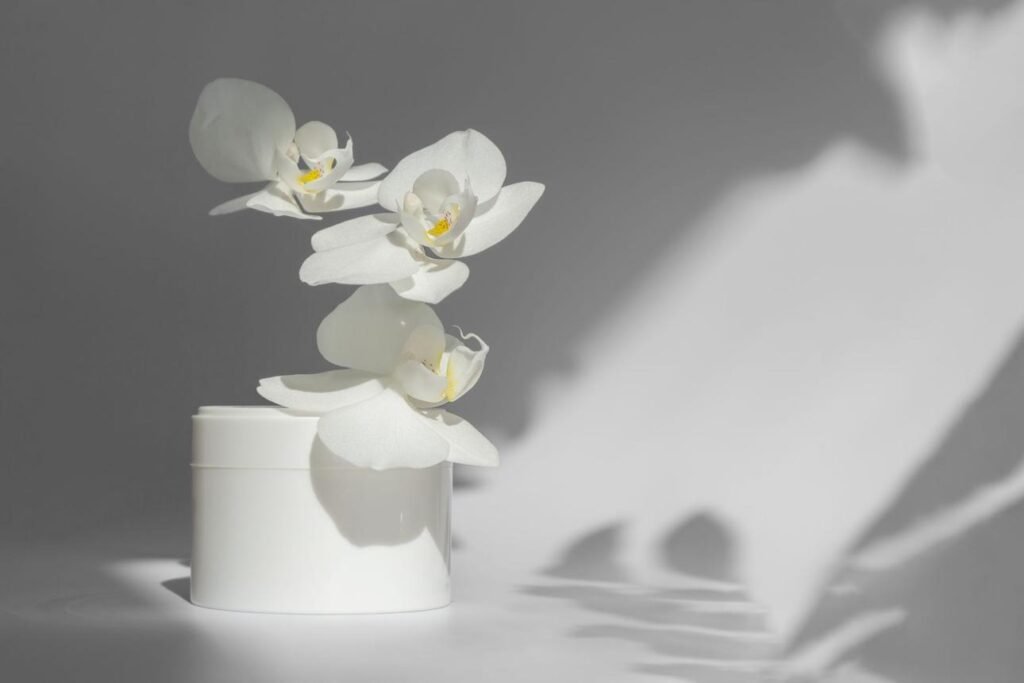
Beauty and skincare branding
Orchid illustrations can suggest elegance, botanical inspiration, and refined presentation. Brands should avoid implying unproven skincare benefits simply because an orchid appears on the packaging.

Hospitality and interior design
Living orchids can add visual interest to reception areas, lounges, and carefully styled rooms. Their appearance can reinforce a sense of care and sophistication.
Wedding and event design
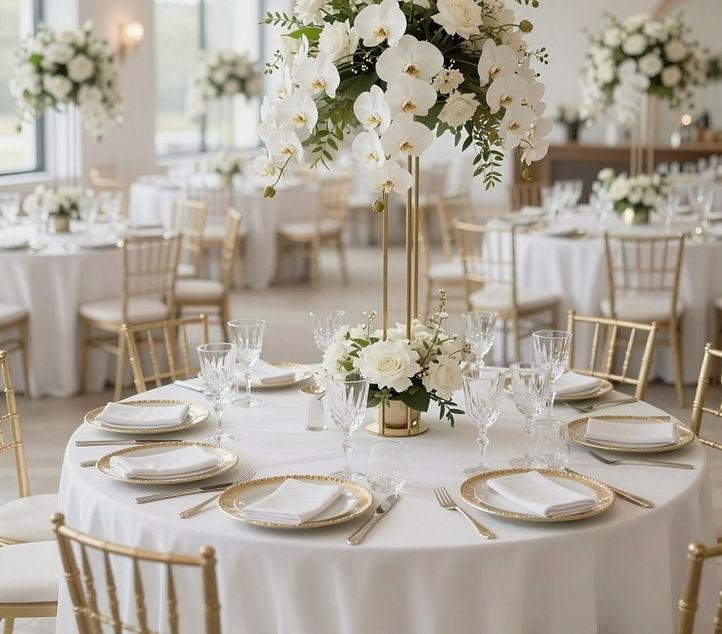
Orchids can create a clean, refined focal point in bouquets, centerpieces, and ceremony decorations. Their color and arrangement help establish the event’s visual identity.
Editorial design and stationery
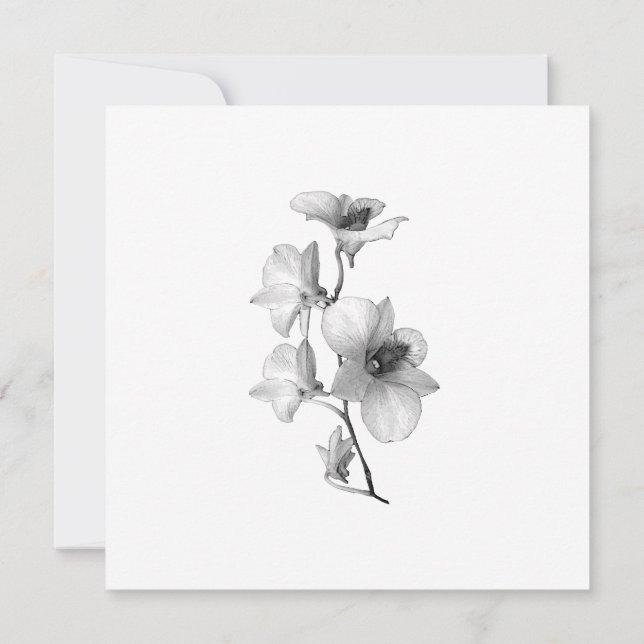
Orchid illustrations can give invitations, greeting cards, journals, and editorial layouts a botanical character associated with elegance and individuality.
How to use orchid symbolism effectively in a logo
If you are designing a logo, poster, or brand identity, begin by identifying the message you want the flower to communicate.
| Design objective | Orchid design approach | Intended impression |
| Luxury | Simplified orchid mark with restrained typography | Premium, refined |
| Beauty and skincare | Soft botanical illustration | Elegant, nature-inspired |
| Education or personal development | Orchid with a new leaf or emerging bloom | Growth, patience |
| Weddings and celebrations | Delicate floral linework | Grace, affection |
| Creative services | Unusual orchid silhouette with distinctive composition | Originality, individuality |
Expert tip: Use the orchid as a meaningful design element rather than decoration without purpose. If your brand is intended to communicate strength, for example, emphasize the flower’s structure and clear silhouette instead of relying only on pale colors and delicate lines.
Also consider accessibility. A logo should remain recognizable at small sizes and should not rely on color alone to communicate its meaning.
11. Orchid Symbolism in Education and Environmental Awareness
Orchids offer a valuable teaching opportunity because their cultural meanings can be connected with biology, history, visual communication, and environmental responsibility.
What can orchids teach us about nature?
Orchids demonstrate how living organisms adapt to different environments and develop specialized relationships with other organisms.
Many orchid species depend on particular fungi during seed germination, and some have highly specialized pollination relationships. These biological characteristics have fascinated researchers and contributed to the plant family’s cultural reputation for complexity and mystery.
RHS
+2
The lessons extend beyond symbolism. Orchids can help students explore:
- Biology: Plant structure, pollination, germination, and adaptation.
- Ecology: Relationships between plants, fungi, pollinators, and habitats.
- History: How collecting and cultivation changed human relationships with plants.
- Art: How botanical forms are represented through drawing and painting.
- Cultural studies: How different communities interpret the same natural object.
Orchid symbolism and conservation
Orchids can also symbolize the fragility of natural ecosystems, although this is a contemporary interpretive use rather than a universal traditional meaning.
Wild orchid populations may face habitat loss, illegal collection, and disruption of the ecological relationships they depend on. Their conservation therefore requires more than an appreciation of their flowers.
A person who loves orchids can support responsible cultivation, avoid purchasing plants collected illegally from the wild, and learn about the needs of particular species before growing them.
In this context, the orchid becomes a reminder that beauty is connected to responsibility. Appreciating a rare plant should include concern for the conditions that allow it to survive.
12. Myth vs. Fact: What Orchid Symbolism Really Tells Us
Orchid symbolism can be meaningful without requiring every popular claim about the flower to be true.
| Myth or assumption | More accurate explanation |
| Orchids always symbolize romantic love. | They can represent love, but also refinement, admiration, achievement, or personal meaning. |
| Every orchid color has one universal meaning. | Color associations differ across cultures, occasions, and individuals. |
| Orchids guarantee fertility or influence a child’s sex. | These are historical beliefs, not established scientific effects. |
| Orchids are inherently sacred flowers. | Some people use them in spiritual settings, but they have no single universal religious status. |
| A dream about an orchid predicts the future. | Dream interpretations are subjective and do not reliably predict events. |
| Orchids symbolize only luxury. | Their meanings also include artistic refinement, resilience, affection, and individuality. |
| An expensive orchid is more meaningful than an ordinary one. | Emotional significance depends on the giver, recipient, and circumstances, not simply the price. |
The central lesson is that symbolism describes how people interpret objects. It does not establish supernatural powers, medical effects, or universal rules about human behavior.
13. Common Mistakes When Interpreting Orchid Symbolism
Understanding orchids more accurately means avoiding a few frequent errors.
Mistake 1: Treating symbolic meanings as facts. An orchid may represent spiritual growth to one person and luxury to another. Neither meaning is an inherent botanical property.
Mistake 2: Ignoring cultural context. A flower’s history in Chinese painting differs from its history in Victorian collecting culture. These traditions should not be blended into one supposedly universal explanation.
Mistake 3: Assuming every gift has a romantic message. Orchids can be professional, friendly, familial, or purely decorative gifts.
Mistake 4: Confusing traditional medicine with scientific evidence. Historical fertility beliefs explain part of the orchid’s cultural history, but they do not prove medical effectiveness.
Mistake 5: Relying on color alone. The recipient, occasion, arrangement, and accompanying message all influence how a flower is understood.
Mistake 6: Overlooking the natural world. Orchids are living organisms with complex ecological relationships, not simply symbols of elegance or luxury.
14. Did You Know? Five Interesting Facts About Orchids
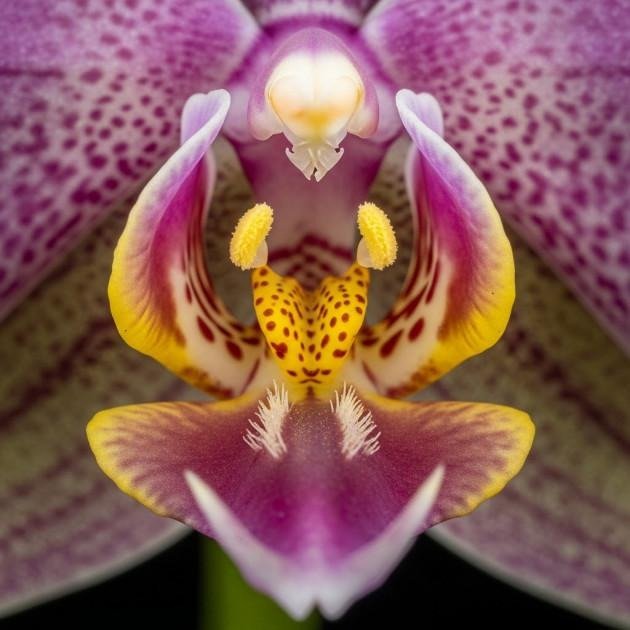
1. Orchid flowers have specialized structures.
Their distinctive floral anatomy helps explain their remarkable diversity and many specialized pollination relationships.

2. Not all orchids grow in soil.
Many tropical orchids grow on trees, using them as a support rather than parasitizing them. Others grow on the ground or on rocks.
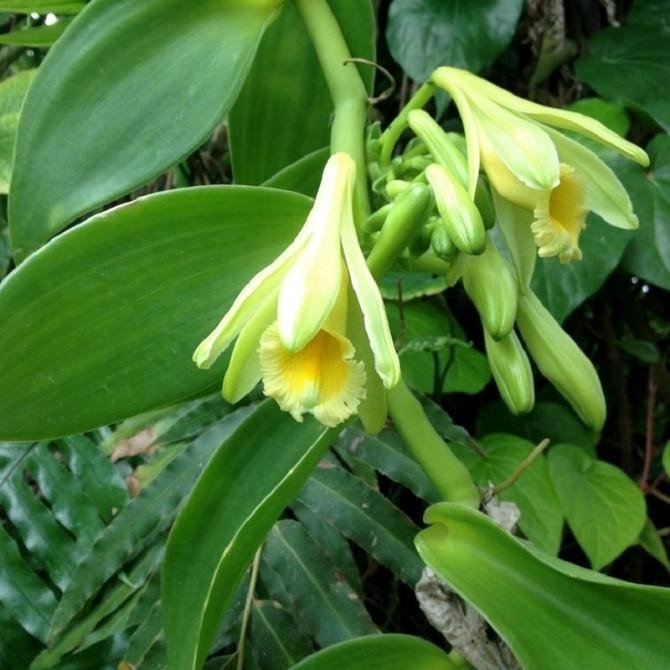
3. Vanilla comes from an orchid.
Vanilla is obtained from the fruits of certain orchids in the genus Vanilla, connecting this flower family with food and cultural history.

4. Orchids fascinated Victorian collectors.
Their unusual forms, fragrance, and challenging cultivation helped create a major collecting craze during the nineteenth century.
Royal Society
+1
5. Orchids have become widely accessible.
Advances in propagation and cultivation made many varieties available to ordinary households, changing their association with exclusivity.
RHS
+1
15. Practical Guide: Choosing an Orchid for Its Symbolic Meaning
If you want to give an orchid or use one in a design, the most effective approach is to connect the flower with the message you want to communicate.
| Your intention | Orchid choice | Why it may fit |
| Express admiration | Purple or pink orchid | Commonly associated with refinement or affection |
| Celebrate a new beginning | White orchid | Often interpreted as a symbol of peace and fresh starts |
| Thank a friend | Yellow or pink orchid | Can convey warmth and appreciation |
| Mark a professional achievement | Purple or white orchid | Supports a polished, celebratory presentation |
| Create a wedding arrangement | White, pink, or mixed orchids | Offers visual elegance and flexibility |
| Encourage personal growth | A living potted orchid | Provides a continuing metaphor for patience and care |
| Communicate individuality | An unusual orchid variety | Highlights diversity and distinctive form |
These suggestions are flexible rather than prescriptive. If you know the recipient’s favorite color or flower, that personal preference may be more meaningful than any conventional symbolic interpretation.
Expert tip: Consider the whole message
When choosing an orchid, think about three elements: the flower itself, the setting in which it will be presented, and the relationship between the giver and recipient.
A simple orchid accompanied by a sincere note may communicate more than an elaborate arrangement selected only because it is expensive.
For businesses, the same principle applies. Symbolic design works best when the visual message supports the brand’s actual values and the experience it offers customers.
16. Frequently Asked Questions About Orchid Symbolism
1. What is the main symbolic meaning of an orchid?
The main symbolic meanings of an orchid are beauty, elegance, love, admiration, strength, and refinement. Orchids can also represent rarity, fertility, luxury, and personal growth. The intended meaning depends on the cultural tradition, flower color, occasion, and personal associations of the people involved.
2. What does an orchid symbolize in love?
In romantic contexts, orchids often symbolize admiration, affection, attraction, and appreciation. Giving someone an orchid can be a thoughtful way to celebrate a relationship or express interest. However, an orchid does not automatically indicate romantic intentions; the relationship and circumstances surrounding the gift matter.
3. What does a white orchid symbolize spiritually?
In contemporary spiritual interpretations, a white orchid may represent peace, clarity, grace, renewal, or a fresh beginning. Some people use it as a reminder of mindfulness and personal development. These meanings are interpretive rather than universal religious teachings, and individual beliefs may differ.
4. What does a purple orchid symbolize?
A purple orchid commonly symbolizes dignity, luxury, refinement, creativity, and distinction. Its association with prestige can make it suitable for congratulations, formal gifts, professional celebrations, and designs intended to communicate sophistication.
5. What does it mean when someone gives you an orchid?
An orchid gift may communicate appreciation, admiration, affection, respect, or good wishes. Its meaning can also depend on the occasion, color, and relationship between the giver and recipient. A potted orchid may carry an additional personal meaning because it can continue growing long after the gift is received.
6. Do orchids symbolize strength and resilience?
Yes, orchids can symbolize strength and resilience in contemporary interpretations. Many species have adapted to specialized habitats and developed complex relationships with fungi and pollinators. These biological characteristics provide a natural metaphor for adaptability, perseverance, and the importance of suitable conditions for growth.
Conclusion: Why Orchid Symbolism Still Matters
Orchid symbolism remains relevant because orchids can communicate several ideas at once. They may represent love, elegance, individuality, luxury, resilience, or personal development, depending on the context in which they appear.
Their history connects ancient Mediterranean beliefs with East Asian artistic traditions, Victorian collecting culture, and contemporary floral design. Their distinctive biology also provides a meaningful foundation for modern reflections on adaptation, diversity, and environmental responsibility.
Understanding these associations can help people choose thoughtful gifts, interpret artwork, create more purposeful designs, and appreciate the relationship between culture and nature. For writers, educators, artists, and designers, orchids offer a particularly rich example of how a natural form becomes a cultural symbol.
The most important principle is simple: an orchid’s meaning comes not from one universal definition, but from the interaction between its natural characteristics, its cultural history, and the intentions of the people who interpret it.
That flexibility is what makes the orchid such a lasting symbol of beauty, individuality, and the many ways people find meaning in the natural world.
Editorial note: This article distinguishes documented botanical and historical information from cultural traditions, personal interpretations, and spiritual beliefs. SEO elements and semantic coverage have been incorporated naturally; actual search rankings, featured-snippet placement, and AI search visibility cannot be guaranteed.

